Step by step
1. Survey
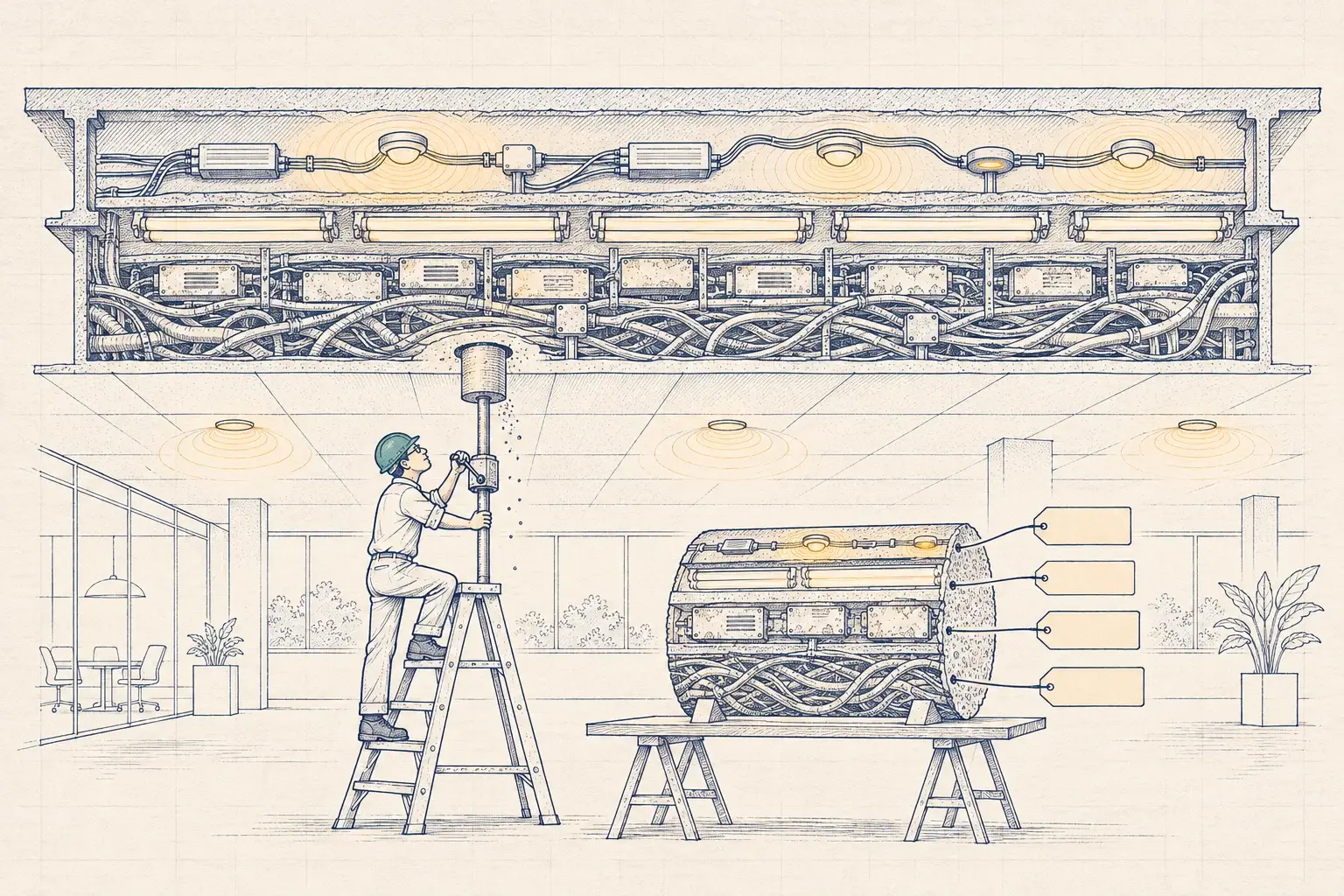
We walk every space type, including after hours where we can, because that’s when a lighting system shows its habits. We count fixtures, read driver labels, trace circuits at the panels, and note what each control actually does, which is often not what the drawings say. We interview facilities staff, a few occupants, and whoever owns the network. We also identify the utility program and the authority having jurisdiction, because both shape the design.
- Inputs: any drawings and panel schedules, 12 to 24 months of utility bills, access to every space type, and a contact in facilities and in IT.
- Outputs: what’s installed, what works, what it costs to run, and a recommendation on whether a project is worth it.
- Artifacts: Existing Conditions Report, baseline energy profile, and photo log.
Delivered on its own, this step is our fixed-fee Baseline Assessment, and the fee is credited toward the project if you go ahead.
2. Bench
Before anything goes in a ceiling, we wire the proposed controllers, sensors, drivers, and gateways together in the Lytbit Lab, load the firmware versions you’ll actually receive, and run your draft sequences. We check dimming curves, sensor timing, gateway behavior, and what each device sends over the network. A problem found here costs an afternoon. Found in the field, it costs a lift rental and a return visit.
- Inputs: candidate device list, firmware versions, draft sequences, and the BMS or network the system must join.
- Outputs: a go or no-go for each combination, known issues, and required firmware.
- Artifacts: Bench Note, plus packet captures for your IT team on request.
3. Design
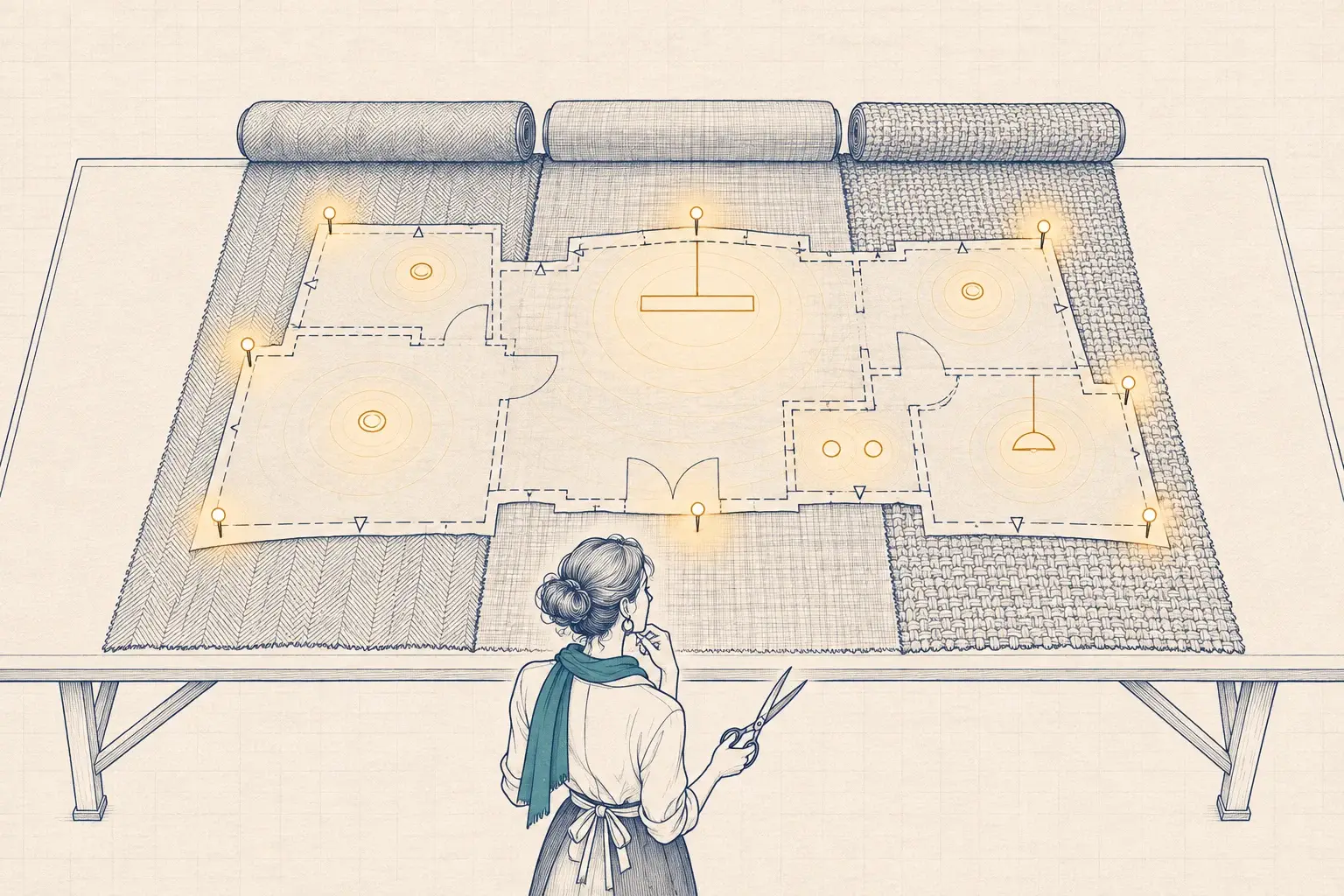
We zone the building, write the sequences of operation, and produce specifications and a network design. We design to the energy code edition your jurisdiction enforces, which we confirm on each project, and to the rules of the utility program you’re pursuing. For TVA EnergyRight, that means pre-approval before any work starts.
- Inputs: Existing Conditions Report, Bench Note, your goals and budget range, code and program requirements, and your IT standards.
- Outputs: a design a contractor can bid and an IT team can approve.
- Artifacts: Zoning Atlas, Sequence Book, specification sections and device schedule, network and riser diagrams, BMS points list, and the incentive pre-application where applicable.
See controls design and specification for the full scope.
4. Oversee
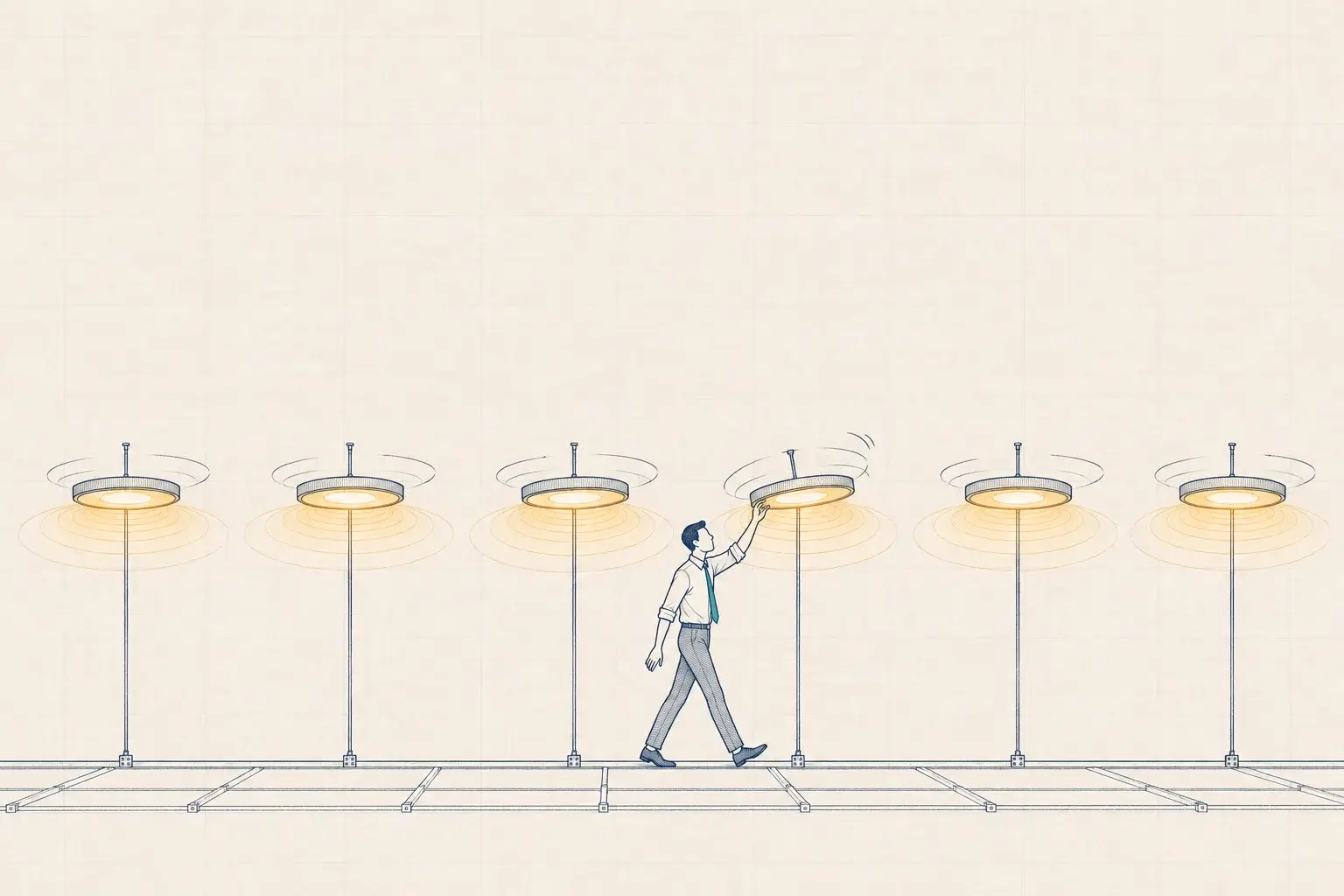
We review submittals against the design and the bench results. A substitution is acceptable only if it’s bench-equivalent, and we’ll test it if it isn’t. We hold a pre-installation meeting with the electrical contractor, visit at rough-in and before ceilings close, and answer RFIs quickly so the schedule doesn’t stall on us.
- Inputs: submittals, contractor schedule, and RFIs.
- Outputs: an installed system that matches the design, with every deviation documented.
- Artifacts: submittal review log, RFI log, and site visit reports with photos.
5. Commission
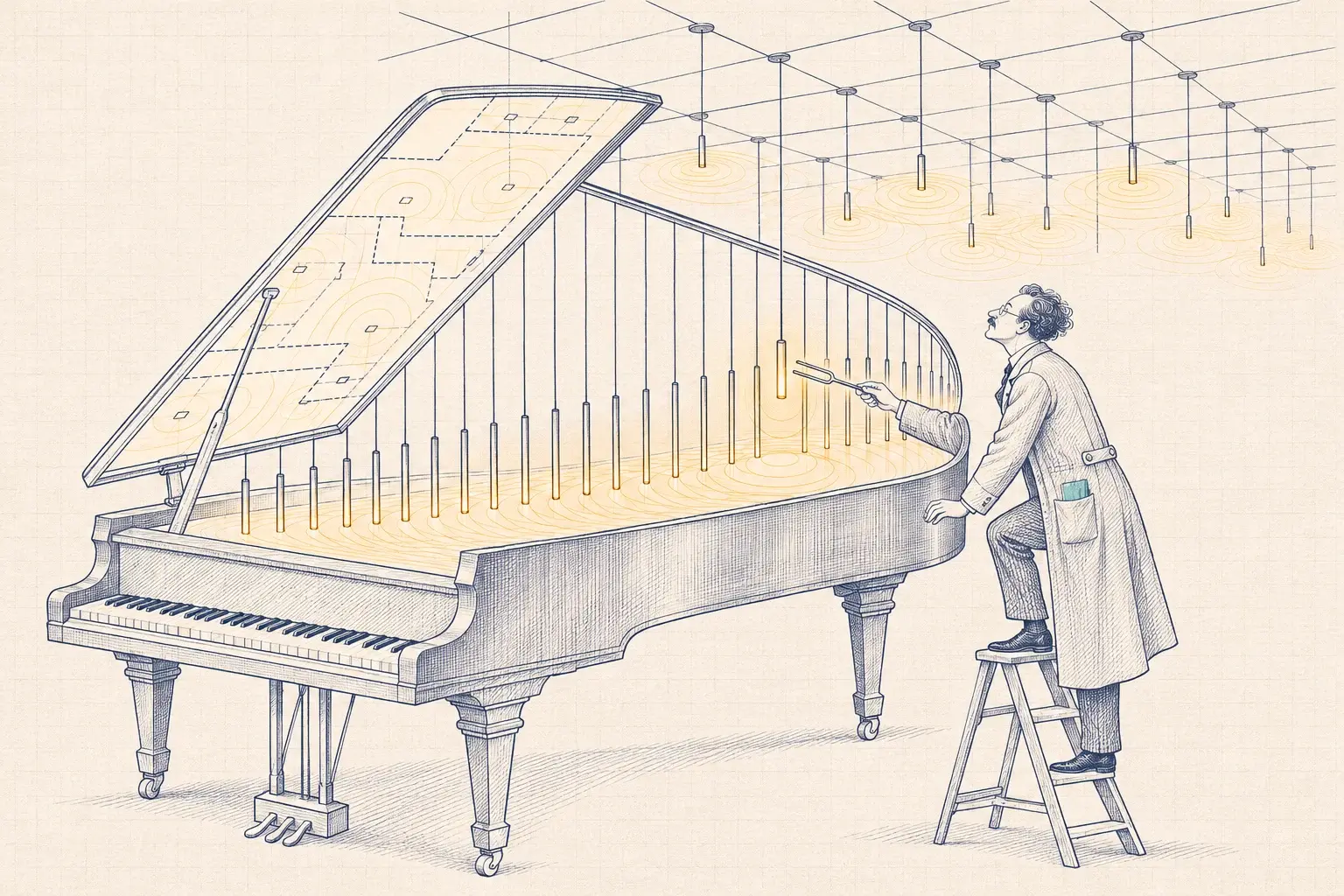
We test every sequence through all of its states, set high-end trim with a calibrated meter, and record the result, not just the setting. Failures go on a punch list with a named owner and get retested until they close. Then we train your facility team and whoever owns the network. Details are on our commissioning page.
- Inputs: an installed, started-up system, the Sequence Book, and the as-built device schedule.
- Outputs: a building that behaves the way it was designed to, with the proof on paper.
- Artifacts: functional test logs, Configuration Report, trim schedule, closed punch list, as-commissioned Sequence Book, and training records.
6. Operate
The system connects to Lytbit Ledger, which tracks energy against the baseline, flags faults, and keeps a log of every change. Depending on your support tier (Watch, Tune, or Steward), we add seasonal re-tuning visits, faster response, annual re-commissioning, and firmware management. If you claimed an incentive, Ledger holds the documentation for post-inspection.
- Inputs: a commissioned system connected to Ledger, plus the baseline.
- Outputs: savings that persist and can be measured.
- Artifacts: quarterly reports, M&V reports, tuning log, and re-commissioning records.
See managed monitoring and support for what each tier includes.
Joining partway through
Plenty of projects start at step 5, with a system that’s installed but was never properly tested, or at step 6, with a system that runs but that nobody watches. That’s fine. We backfill the minimum the later steps depend on: a short survey of representative spaces and, if none exists, a written Sequence Book. You can’t test against an intent nobody wrote down.