Industries

Warehouse and cold storage lighting controls

Most of a warehouse is empty most of the time. Good controls light the aisle a forklift is about to enter, dim it once the forklift leaves, and prove the savings to your utility program.

ProjectLytbit · Smart lighting & IoT
SheetA-02
Rev26.11
DisciplineWarehousing
DrawnLytbit Engineering
Scale1 : 1
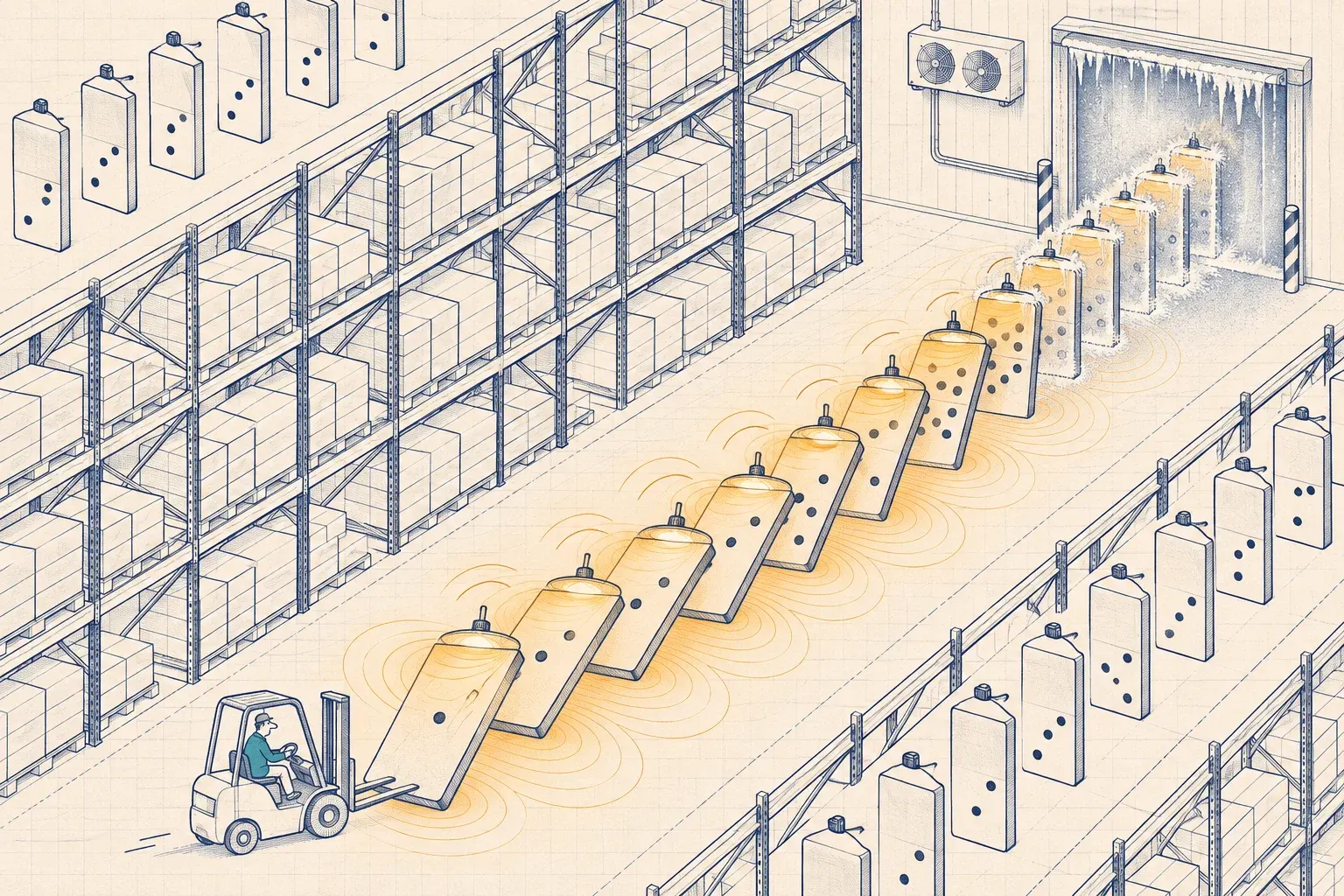
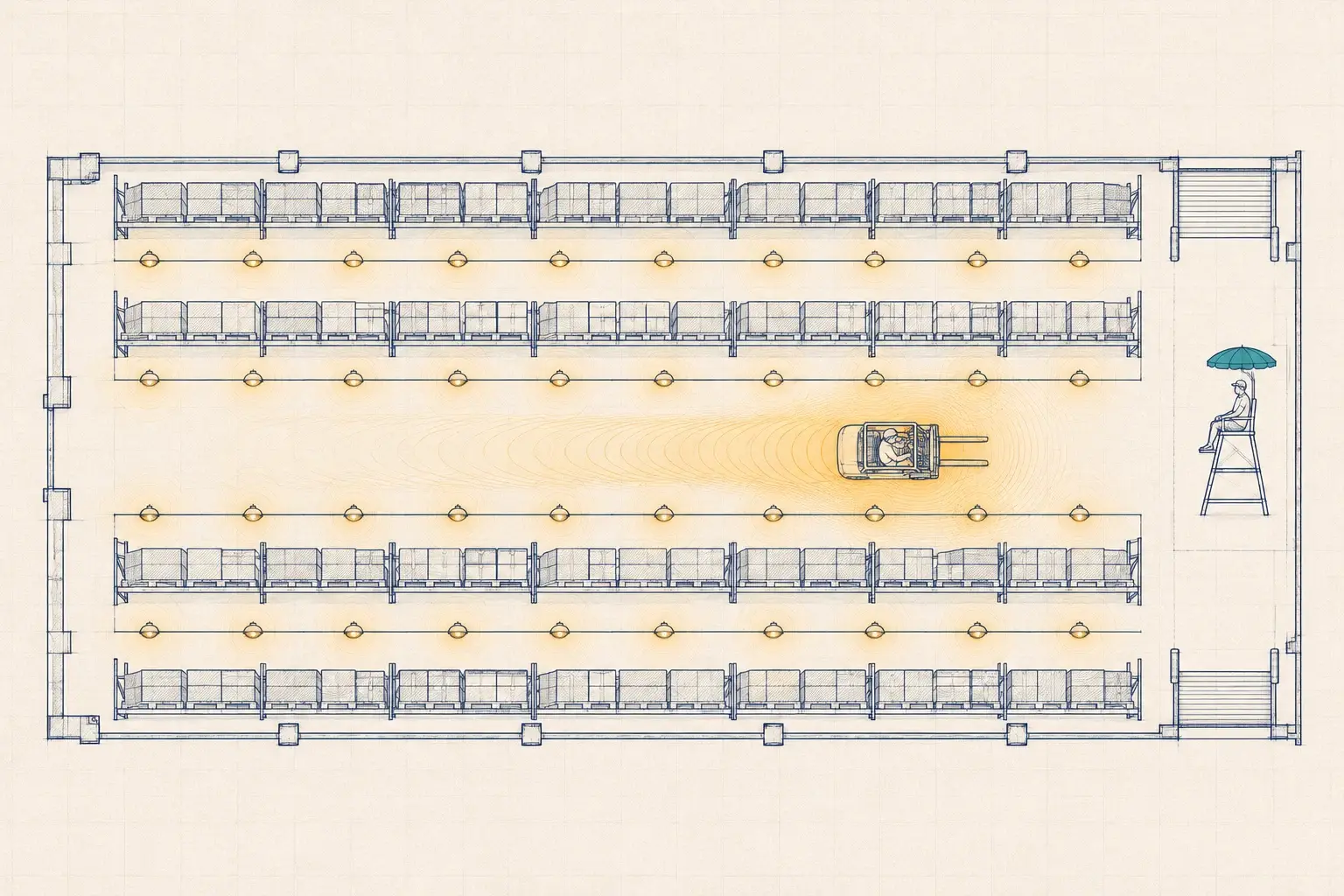
Top-down view of a warehouse aisle lined with racking, where a forklift has tipped a row of dominoes topped with light fixtures; the falling tiles glow ahead of it toward a frosted freezer door.
Plate A-02The light should reach the end of the aisle before the forklift does.

What makes these buildings hard

Aisle-by-aisle high-bay sensing, forklift-aware sequences, and cold-rated devices, packaged for networked-controls incentives.

Condition 01

Light has to arrive before the forklift

A forklift crosses a long aisle in seconds. If sensors only see it once it is under the fixture, drivers turn into a dim aisle. The sequence has to look ahead.

Condition 02

Sensors placed by the rack plan, not the traffic

Sensors mounted over racking watch stocked pallets, not aisles. After a re-rack, half of them are watching the wrong place.

Condition 03

Cold changes everything

Freezer suits hide body heat from passive infrared sensors, frost clouds lenses, batteries lose capacity, and condensation forms at doors. Devices rated for a warm room fail quietly in a cold one.

Condition 04

Dock doors and mixed daylight

Open dock doors bring daylight, weather, and truck traffic into the first bays, which confuses sensors that were set up on a cloudy day with the doors closed.

What we'd do about it

Control strategies that hold up in this building type, in the order we usually apply them.

  1. Aisle zoning with look-ahead

    Each aisle is a zone, and cross-aisle sensors wake the first fixtures of an aisle before the forklift turns in. Vacant aisles drop to a low level instead of off where people walk.

  2. Luminaire-level lighting control

    A sensor in every fixture gives the finest zoning and per-fixture energy data. DLC estimates average savings of about 49% for NLC and 63% for NLC with LLLC.

  3. Cold-rated, bench-tested devices

    We specify fixtures, sensors, and nodes rated for the room temperature, and we test detection range with insulated clothing on the bench before anything is ordered.

  4. Packaged for the incentive

    We choose products from the DLC Qualified Products List, get pre-approval before ordering, and give program staff the energy data they ask for.

Typical control sequence by space type

Starting points we refine on site. Final delays and levels are recorded in the Sequence Book at commissioning.

SpaceStrategyTypical setting or behaviorNotes
Racking aislesAisle occupancy with look-aheadLow background level when vacant; full output within a second or two of a forklift enteringSensors at aisle ends and cross-aisles, with narrow aisle lenses
Cross-aisles and travel lanesOccupancy with a longer holdHigher low level; full output with traffic; longer hold timeThe busiest paths, so avoid constant cycling
Bulk floor storageOccupancyOff or near-off after a short delayOnly where nobody walks without a vehicle
Pick and pack areasShift schedule plus task tuningFull trimmed output during shifts; occupancy after hoursMeasure at the work surface
Dock doors and stagingDaylight plus occupancyDims when doors are open on bright days; full output in rain or at nightTune with doors open and closed
Freezers and coolersCold-rated occupancy plus door contactLow level when vacant; full output when the door opens or motion is seenThe door contact backs up a sensor that can't see through freezer suits
Battery charging and maintenanceOccupancyOff after a moderate vacancy delayCoordinate with any required ventilation
Truck yard and exteriorAstronomical schedule plus motion dimmingDims after the last shift; motion raises light at gates and doorsCheck light trespass at property lines

Aisle, zone, or fixture?

The first decision is how finely to control your warehouse: by aisle, by zone, or fixture by fixture, and whether your cold areas need a different answer. That choice drives cost, savings, and incentive eligibility more than the brand of the fixtures does.

A warehouse is mostly empty

Walk any distribution center during a shift and count the people. Most aisles are empty most of the time, and most fixtures are lit for nobody. That is why warehouses are among the best candidates for networked controls, and why utility programs favor them.

The trick is making the empty aisles dim without making the busy ones annoying. Drivers notice immediately when an aisle is dark as they turn in, and the first complaint is often enough to get the sensors taped over or the system set to “on”. We design to avoid that first complaint.

Aisles, travel lanes, and look-ahead

We zone by how vehicles and people move, not by the fixture layout:

  • Racking aisles get their own zones, with sensors at the aisle ends and lenses shaped for a narrow aisle.
  • Cross-aisles are the early warning system. Their sensors wake the first fixtures of the aisle a forklift is about to enter.
  • Travel lanes hold their light longer, because constant cycling under heavy traffic is distracting and saves little.
  • Pick and pack areas run on the shift schedule with task tuning, and on occupancy only after hours.

Mounting height decides which sensor you can use. At 30 to 45 feet, a standard ceiling sensor mostly sees racking. We test candidate high-bay sensors on the bench at the planned height and lens pattern before we specify them, and we revisit coverage whenever you re-rack.

LLLC, NLC, and how fine to go

Luminaire-level lighting control puts a sensor and a control node in every fixture. Zoning becomes a software decision, a re-rack needs reprogramming instead of an electrician, and every fixture reports its own energy use. DLC estimates average savings of about 49% for networked lighting controls and 63% for NLC with LLLC. Your results will depend on hours, traffic, and how far we can tune, and we show you our assumptions before you commit. Our NLC vs. LLLC article has the full comparison.

We don’t recommend PoE for warehouses with long cable runs. Wireless LLLC is usually the simpler and less expensive path in a big box.

Cold storage is a different building

Coolers and freezers break assumptions that hold everywhere else:

  • Body heat hides. Passive infrared sensors detect warm bodies moving against a cooler background. A worker in a freezer suit shows less heat, so detection range shrinks. We test detection on the bench with insulated clothing and add a door contact where needed.
  • Ratings matter. Every fixture, driver, sensor, and wireless node needs an operating temperature rating that covers the room. Battery-powered devices lose capacity in the cold, so we avoid them in freezers.
  • Doors are the hard part. Condensation and frost form where warm air meets cold, so devices near doors need moisture ratings and careful placement.
  • Light is a refrigeration load. Every watt of lighting inside a freezer becomes heat the refrigeration system has to remove, so savings in cold rooms count twice.

Dock doors

Open dock doors bring in daylight, rain, trucks, and the occasional bird. We tune daylight sensing with the doors both open and closed, keep dock lights on their own control, and set sensitivity so a truck passing outside doesn’t wake the first bay.

Incentives and code

Warehouses fit utility programs well because the savings are large and easy to verify. In TVA territory, which includes Tupelo Water & Light, MLGW, and the North Alabama distributors, EnergyRight requires pre-approval before purchase and gives additional credit for networked controls. Entergy Mississippi and Mississippi Power run their own commercial programs. In every case, we choose products from the DLC Qualified Products List, prepare the application, and coordinate with your local power company and program staff. We don’t quote incentive amounts until the program confirms them in writing.

Energy code requirements for warehouse alterations vary by jurisdiction, and adoption differs across Mississippi, Tennessee, and Alabama, so we confirm the applicable edition with the authority having jurisdiction. Our functional testing documentation follows what recent editions such as the 2024 IECC (section C408.3) expect.

What we’d do first

Ride along with a forklift driver for half an hour. The routes, speeds, and blind turns tell us how to zone. Then read our warehouse lighting controls guide, or follow a 410,000 sq ft distribution center scenario from survey to incentive.
FAQ

Questions we hear often

Still unsure? Write to sales@lytbit.com and a person will answer within one business day.

Should warehouse aisle lights turn off completely?

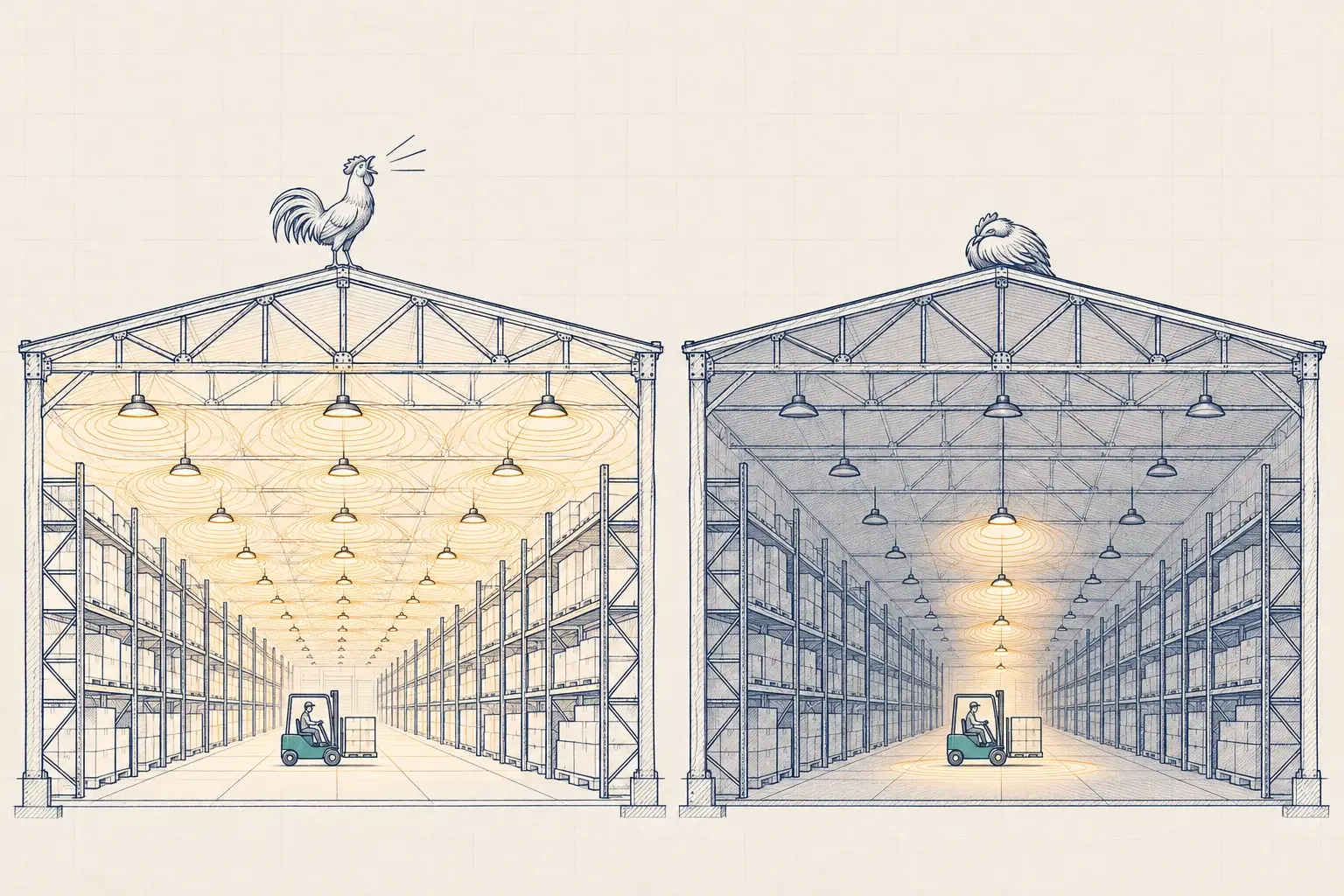
In aisles that forklifts and pickers visit, a low background level usually beats off: drivers can see into the aisle before the sensor fires, and the difference in savings between off and a low level is small. In rarely visited bulk storage, off can make sense. We decide aisle by aisle.

Do LED fixtures work in freezers?

LEDs generally run well in the cold. The weak points are elsewhere: sensors that can't see people in freezer suits, wireless devices whose batteries lose capacity, and condensation at the doors. We check every device's rated operating temperature and test detection as close to real conditions as the bench allows.

Is PoE lighting a good fit for a warehouse?

Usually not. Ethernet runs are limited to about 100 meters, and large warehouses have long runs and tall mounting heights. We don't recommend PoE for warehouses with long cable runs; wireless LLLC or line-voltage fixtures with networked control are simpler. Our article on PoE lighting explains where it does fit.

What do utility programs need from us?

Typically, products listed on the DLC Qualified Products List, pre-approval before purchase, and documentation of the installed controls. TVA EnergyRight gives extra credit for networked controls. Our incentive management service prepares the package and coordinates with your local power company.

Can you work around our operations?

Yes. We commission aisle by aisle, at night or over weekends if the building runs during the day, and we never leave an aisle without working light at the end of a shift.

Lights on in aisles nobody has visited since lunch?

Send us a rack plan and your shift hours. We'll sketch the zoning and tell you which incentive track fits before anything is ordered.