FAQ

Lighting controls questions, answered plainly

The questions owners, facility managers, engineers, and finance teams ask us most before a project starts, grouped by topic. There are no prices here; we explain how work is scoped instead.

ProjectLytbit · Smart lighting & IoT
SheetG-05
Rev26.11
DisciplineReference
DrawnLytbit Engineering
Scale1 : 1
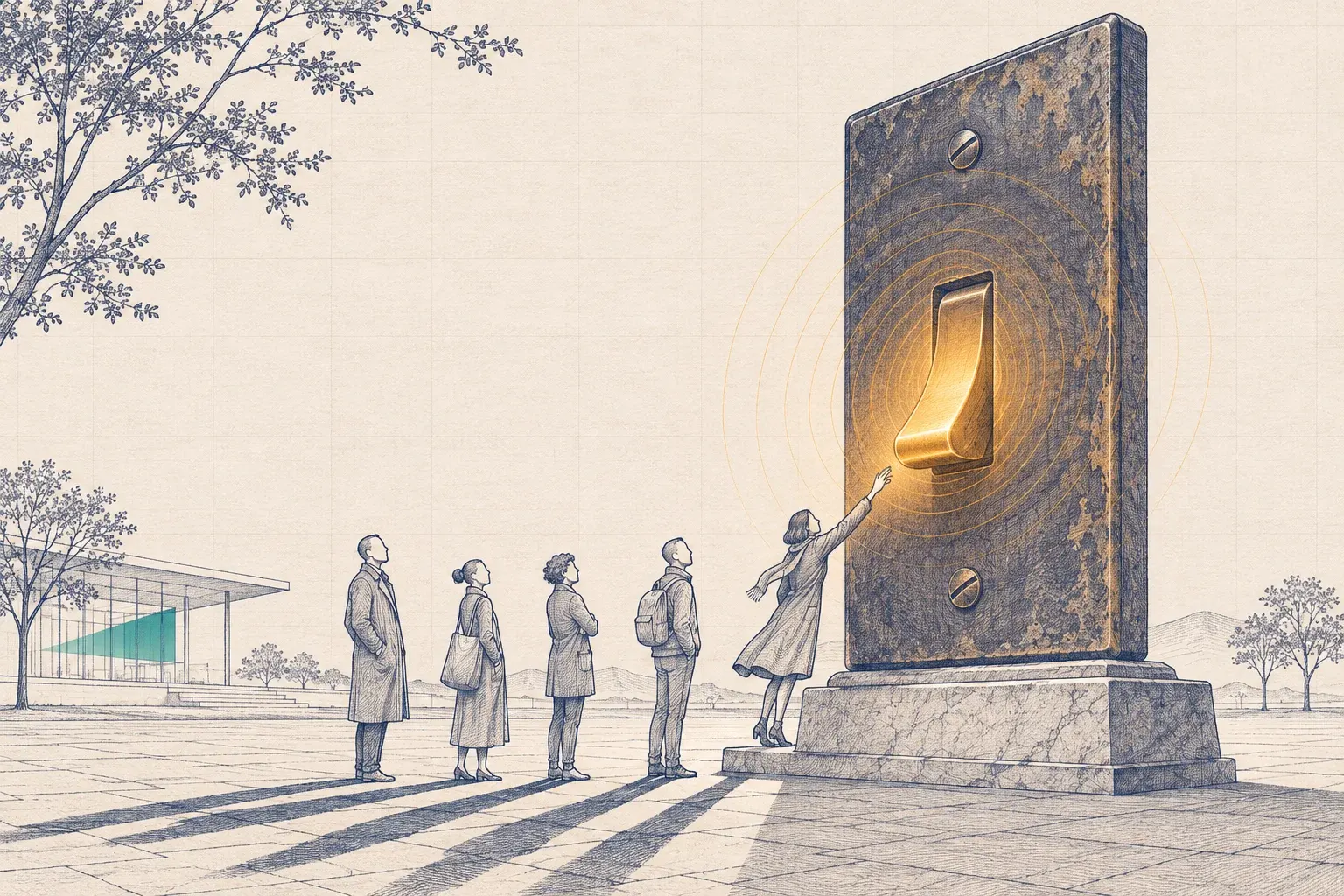
A large bronze statue of a light switch plate on a plinth, dark everywhere except a brightly polished toggle, with a short line of small figures waiting to touch it.
Plate G-05The shiny spot tells you what everyone reaches for first.

How this page is organized

The 24 answers on this page follow the order in which questions usually come up on a first call:

  1. Scope: what we do, for which buildings, and where.
  2. Cost and incentives: how work is scoped and billed, what savings to expect, and how utility programs and financing fit in.
  3. Technology: wired or wireless, NLC or LLLC, PoE, BMS integration, and Matter.
  4. Operations: life after commissioning, support tiers, data ownership, and re-commissioning.
  5. Working together: how a project starts and who’s involved.

We don’t list prices on this site. A number quoted without seeing the building, its controls, and its utility bills would be either padded or wrong. Instead, each answer explains how that part of the work is scoped, and the Baseline Assessment turns those factors into a fixed figure for your building.

Where an answer depends on your jurisdiction, such as which energy code edition applies, we confirm it with the authority having jurisdiction at the start of each project rather than guessing here.

If your question isn’t on this page, it’s probably a good one. Email sales@lytbit.com about projects or lab@lytbit.com about technical topics, or contact us through the form.
FAQ

Everything we get asked

Still unsure? Write to sales@lytbit.com and a person will answer within one business day.

What does Lytbit actually do?

We design, commission, and connect networked lighting controls from any manufacturer, integrate them with building systems and IoT devices, and run Lytbit Ledger to track energy and faults afterward. That work is organized into 16 services under four pillars: Assess & Design, Deploy & Commission, Connect & Integrate, and Operate & Finance.

What size of building do you work on?

Anything from a single bank branch or clinic to large distribution centers and multi-building campuses. Small sites are often grouped into one portfolio engagement so that the survey, design, and commissioning work is shared across them.

Do you install fixtures and wiring?

On turnkey projects we deliver the whole job, with installation by an electrical contractor we coordinate and supervise. On design and commissioning engagements, your contractor installs, and we review submittals, visit the site, and test the result.

Can you take over a system someone else installed?

Yes, and it's one of the most common ways we start. We recover the configuration, compare it with what the building needs, and re-commission it. If the platform is discontinued, our legacy system rescue service plans the migration.

Where do you work?

On site across Mississippi, Memphis and West Tennessee, and North Alabama, from our office in Tupelo. Design reviews, bench testing, and Ledger monitoring are available anywhere in the US. See the service area.

How much does a lighting controls project cost?

It depends mostly on device count, the number of distinct sequences, what's already installed, and whether the building is occupied during the work. We don't publish prices because a number without those facts would mislead you. Most projects start with a fixed-fee Baseline Assessment, credited toward the project if you go ahead. For a first sense of scale, try the Savings Estimator.

How are your engagements billed?

Assessments are a fixed fee. Design is a fixed fee per package, usually by space type. Commissioning is a fixed fee per building, scoped from the device and sequence count, and startup support is billed per day. Turnkey projects are quoted as one contract. Support plans and Ledger are subscriptions, and lighting-as-a-service is a fixed monthly fee.

How much energy will controls save us?

DLC estimates average savings of about 49% for networked lighting controls and 63% for networked controls with luminaire-level lighting control. Your result depends on operating hours, what's already installed, and how people use the space. We measure your baseline first and give you a range with the assumptions written down.

Can you help with utility incentives?

Yes. We work with TVA EnergyRight, which requires pre-approval before work starts and gives extra credit for networked controls, as well as Entergy Mississippi Solutions for Business and Mississippi Power's commercial programs. We prepare the applications and coordinate with your local power company and program staff. See incentive and rebate management.

Can we upgrade without paying for it all up front?

Yes. Lighting-as-a-service replaces the upfront cost with a fixed monthly fee through financing partners, with monitoring and support included. Whether the contract counts as a lease under ASC 842 depends on its terms, so check with your accountant before you sign.

Should we choose wired or wireless controls?

For occupied retrofits, wireless luminaire-level controls usually win because there's little new wiring and less disruption. For new construction with detailed sequences, wired DALI-2 gives more control and better diagnostics. Many buildings end up with both, which is why commissioning across brands matters.

What's the difference between NLC and LLLC?

Networked lighting controls (NLC) group fixtures into zones controlled by networked sensors and controllers. Luminaire-level lighting control (LLLC) puts a sensor and controller in each fixture, so every fixture responds on its own. LLLC costs more per fixture and usually saves more. Our article on NLC vs. LLLC walks through the choice.

Is PoE lighting worth it?

Sometimes. It suits offices where the IT team is already involved in a renovation and wants lighting on the same infrastructure. We don't recommend it for warehouses with long cable runs, and we always measure standby power, which can erode the savings. See PoE and DC lighting.

Can our lighting controls share data with the BMS?

Usually, over BACnet/IP or BACnet/SC. The most valuable point is occupancy, which lets the BMS set back HVAC in empty zones; DLC NLC 5.2 adds requirements for that kind of HVAC integration. We map, name, and test every shared point. See lighting and BMS integration.

Is Matter ready for commercial lighting?

Not yet for base-building lighting. The Connectivity Standards Alliance now lists commercial buildings as a target market, but Matter doesn't define commercial lighting control device types yet. We're testing it in the Lytbit Lab and explain our view in Is Matter ready for commercial buildings?

What happens after commissioning?

The system connects to Lytbit Ledger, which tracks energy against your baseline and flags faults. You can run it yourself or add a support plan. Either way, you keep the configuration report, test logs, and Sequence Book.

What are the Watch, Tune, and Steward support tiers?

Watch is remote monitoring with next-business-day response and a quarterly report. Tune adds seasonal re-tuning visits and 8-business-hour response. Steward adds 4-hour remote response for critical faults, annual re-commissioning, and firmware management. See managed monitoring and support.

Who owns the data and the system configuration?

You do. Admin credentials, databases, configuration reports, and Ledger records belong to you. Ledger data is hosted in the US and can be exported at any time as CSV, through the API, or over MQTT. Details are on our security and data page.

What if our controls manufacturer discontinues the platform?

Don't rip it out yet. A discontinued system usually keeps running; the risks are spare parts, support, and security updates. We document what you have, back up the configuration, and plan a staged migration. Our migration playbook lays out the steps.

How often should lighting controls be re-commissioned?

Every few years, and after any renovation or change of use. Furniture blocks sensors, schedules drift, and temporary overrides become permanent. Steward plans include annual re-commissioning; on other plans, Ledger alerts tell you when a zone has drifted far enough to need it.

How does a project start?

Use the Start a project form or email sales@lytbit.com. A person replies within one business day, then we hold a short scoping call and send a written proposal, usually for a Baseline Assessment.

Will you work with our engineer, contractor, and IT team?

Yes. Most projects involve all three. Our approach page includes a responsibility table showing who does what at each step, so nobody has to guess.

Do you visit the site before sending a proposal?

For most projects, the Baseline Assessment is the site visit, and it's what makes the later proposal accurate. For small or well-documented projects, we can scope design or commissioning from drawings, photos, and a call.

Which email address should we use?

Use sales@lytbit.com for projects, quotes, and general questions. Use lab@lytbit.com for technical and integration questions, pilots, manufacturer and interoperability topics, and job applications. If you're unsure, either one reaches a person.

Have a question that isn't here?

Email sales@lytbit.com about projects or lab@lytbit.com about technical topics. A person replies within one business day.