Assess & Design

Energy code compliance for lighting controls

Lighting controls are where energy codes get specific, and where projects often stall at plan review or final inspection. We confirm which code applies, design to it, and produce the testing records that prove it.

ProjectLytbit · Smart lighting & IoT
SheetE-03
Rev26.11
DisciplineCode Compliance
DrawnLytbit Engineering
Scale1 : 1
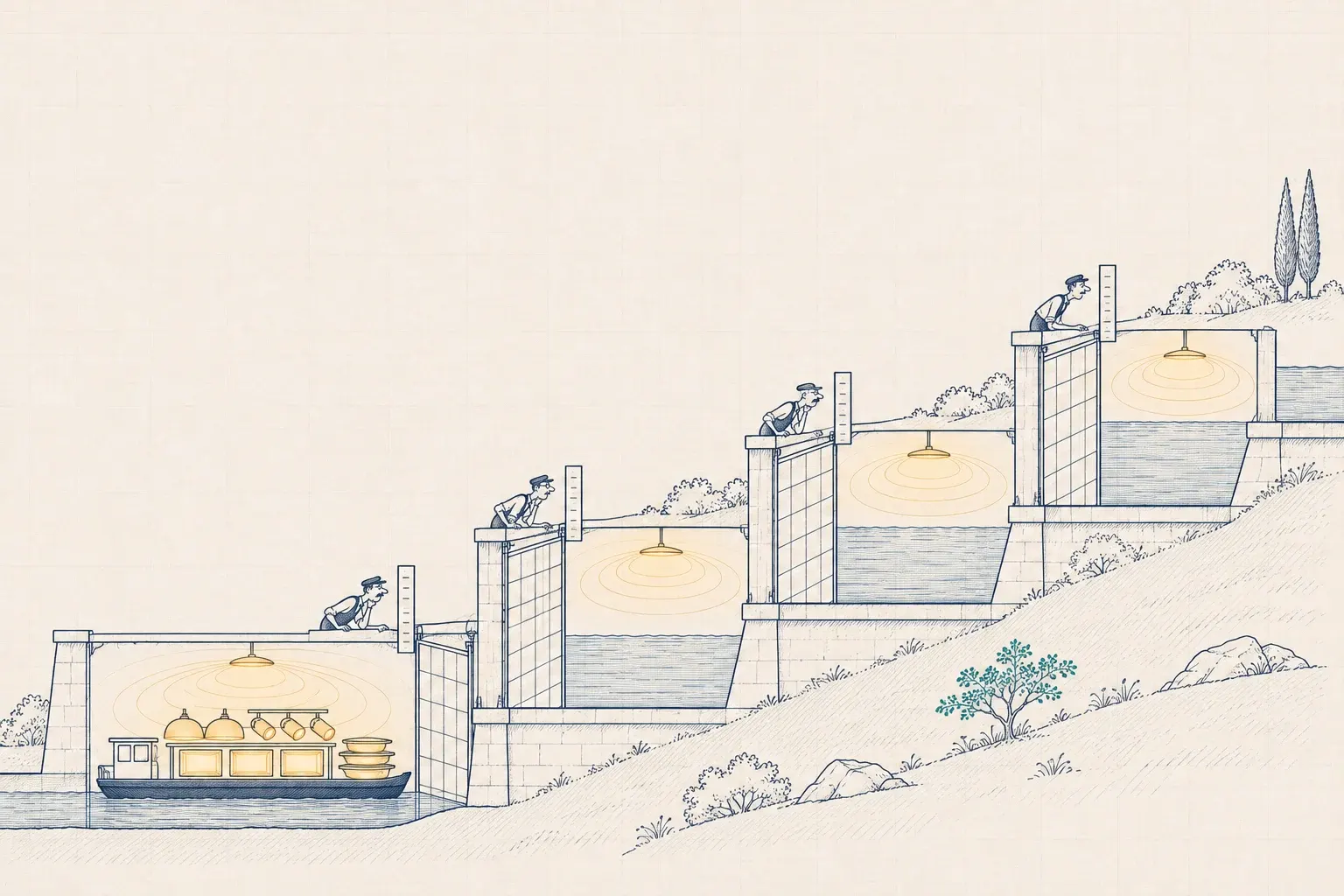
A barge loaded with light fixtures waits at the bottom of a canal with four lock chambers at different water levels, each gate watched by a small lock-keeper reading a gauge.
Plate E-03The fixtures don't change at the state line. The water level does.

What changes when we're done

Lighting control requirements under ASHRAE 90.1-2022, the 2024 IECC and Title 24-2025, confirmed per jurisdiction, with COMcheck support and functional testing records.

  • A code basis memo for every site, recording the edition and local amendments the authority having jurisdiction confirmed
  • Controls designs that meet the required sequences the first time, rather than after a failed inspection
  • COMcheck lighting and controls inputs prepared and reconciled with the drawings before submittal
  • Functional testing records ready for the inspector, the commissioning authority and your utility program
  • One consistent method across a multi-state portfolio, with local differences tracked instead of guessed

What's included

Every engagement is scoped to the building, but these are the parts we won't skip.

E-03.01

Code basis confirmation

For each site we contact the authority having jurisdiction (AHJ) to confirm the adopted edition, local amendments and documentation expectations, and we record the answer with a date and a name.

E-03.02

Requirement mapping

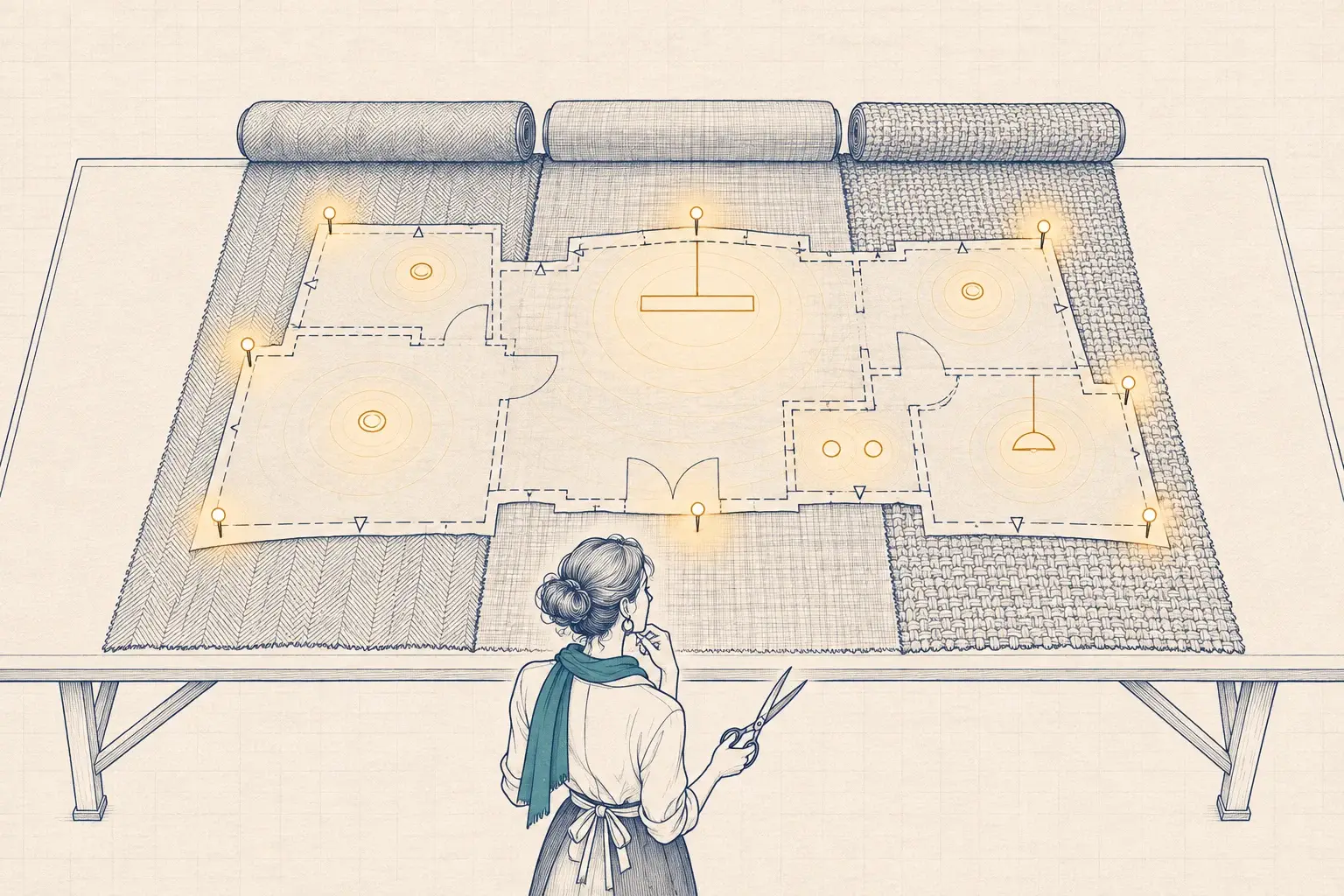
Space-by-space control requirements mapped onto your floor plans: local control, automatic shutoff, partial-off and multi-level control, daylight-responsive control, exterior controls, and high-end trim or demand response where the code calls for them.

E-03.03

Lighting power review

Interior and exterior lighting power checked against the allowance for the compliance path you are using, with options when a design runs over.

E-03.04

COMcheck support

We prepare the lighting and controls portions of COMcheck and reconcile them with the fixture schedule and drawings, for the design professional responsible for the submittal to review and sign.

E-03.05

Functional testing documentation

Test procedures and signed results for every required control, organized to the functional testing provisions of the applicable code, such as section C408.3 of the 2024 IECC, and reusable for utility program verification.

E-03.06

Portfolio code matrix

For multi-site owners, one matrix of sites, editions, amendments and requirement differences, kept current as jurisdictions adopt new editions.

How it works

The same steps on every project, so you always know what happens next and what you'll receive.

  1. List the sites and project types

    We record each site's address, building type and project type. New construction, additions and alterations trigger different requirements, so an LED retrofit is not exempt by default.

  2. Confirm with the AHJ

    We confirm the edition, amendments and submittal expectations with the building department for each site, before design starts.

  3. Map and design

    Required controls are mapped per space type and written into the sequences of operation, so compliance is designed in rather than checked at the end.

  4. Document and submit

    COMcheck inputs, control narratives and drawing notes are prepared and cross-checked, then handed to the design professional who signs the submittal.

  5. Test and close out

    Required controls are functionally tested and the signed records are filed in your Lytbit Ledger workspace, ready for the inspector and the utility program.

You receive

Deliverables

  • Code basis memo per site, with the AHJ confirmation recorded
  • Controls requirement map by space type
  • COMcheck lighting and controls inputs, reconciled to the drawings
  • Functional test procedures and signed test reports
  • Portfolio code matrix for multi-site owners

How it's scoped

Fixed fee per site, bundled into a design package or scoped on its own for projects someone else designed

  • Portfolios: a fixed fee for the code matrix, then a per-site fee that reflects how many sites share a jurisdiction and prototype.
  • Functional testing is delivered with our commissioning service, or as a documentation review of tests performed by others.
  • Responses to plan-review comments within the original scope are included.

Good fit if

Who this is for

  • Your plan reviewer or inspector has asked for lighting controls documentation you don't have
  • You own sites in several states and need one consistent approach to different codes
  • Your design team wants a controls specialist to check compliance before submittal
  • A utility program requires proof that the controls were tested

The first question is which code, and who says so

Every lighting controls design rests on one fact that is easy to get wrong: which energy code edition, with which local amendments, the building department will enforce on this project. In our region the answer varies by state, by city and county, and sometimes by building type. Published summaries conflict, and adoption changes.

So we never assume. At the start of every project we confirm the code basis with the authority having jurisdiction and write it down. The question for you is whether your design team has that answer in writing before the drawings are done.

What current model codes ask of lighting controls

The three codes we work with most share a direction: more automatic control, finer dimming and proof by testing. This summary is a starting point. The details depend on space type, compliance path and local amendments.

Requirement ASHRAE 90.1-2022 2024 IECC Title 24-2025 (California)
Local manual control Required in most spaces Required in most spaces Required
Automatic shutoff Occupancy or schedule based Occupancy or schedule based Required; occupancy sensor delay of 20 minutes or less
Daylight-responsive control Required in daylight zones above set wattage thresholds Required; the 2024 edition lowers the wattage threshold Required at 75 W or more
Multi-level and dimming Partial-off and multi-level control in many spaces Light-reduction controls in many spaces Continuous dimming down to 10% or lower
Exterior lighting Daylight shutoff and after-hours reduction Daylight shutoff and after-hours reduction Required outdoor controls
Functional testing Required Required (C408.3), extended to high-end trim, demand-responsive and automatic receptacle controls where installed Acceptance testing

DOE determined that 90.1-2022 saves roughly 10% over 90.1-2019. Much of the practical difference for a lighting designer is in the controls, not the fixtures.

Multi-state portfolios

A retail chain or bank can build the same prototype in three states and face three different code bases. Two shortcuts cause trouble:

  • Designing every site to the oldest code in the portfolio, which fails plan review where a newer edition applies.
  • Designing every site to the strictest code, which adds cost where it isn’t required and can complicate local inspections.

Our approach is a portfolio code matrix. We design one prototype controls package to a common baseline, then track each jurisdiction’s differences as named deltas: a shorter sensor delay here, a lower daylight threshold there. Site teams build from the prototype and apply only their deltas.

COMcheck without surprises

COMcheck is DOE’s compliance software, and the lighting section is where submittals most often come back with comments. The usual causes are mechanical: a fixture schedule that changed after the COMcheck run, space types that don’t match the plan labels, or controls claimed in COMcheck that never appear on the drawings. We reconcile all three before submittal. The design professional responsible for the project signs the result.

Functional testing is where compliance is proven

Recent codes don’t stop at requiring controls. They require proof that the controls work, through functional testing documented and delivered to the owner. That is the same work as commissioning, so we write the test procedures during design and run them at the end of construction.

The signed records go into the Ledger Reports module in your Lytbit Ledger workspace, where they also serve utility programs that ask for verification. Our incentive management service reuses them so you don’t produce the same evidence twice.
FAQ

Questions we hear often

Still unsure? Write to sales@lytbit.com and a person will answer within one business day.

Which energy code applies in Mississippi, Tennessee or Alabama?

Adoption varies by state, by jurisdiction within a state and by building type, and published summaries don't always agree with each other. We don't rely on a summary. We confirm the adopted edition and local amendments with the authority having jurisdiction at the start of every project and record the answer. Our post on Mississippi's commercial energy code explains how to check for your own building.

What is the difference between ASHRAE 90.1-2022 and the 2024 IECC for lighting controls?

The IECC lets commercial projects comply through ASHRAE 90.1 instead, so many projects can choose a path. The two differ in details such as daylight-control thresholds and which controls must be functionally tested. Our 90.1-2022 vs. 2024 IECC checklist compares them line by line.

Do you sign COMcheck reports?

No. We prepare and check the lighting and controls inputs. The design professional responsible for the submittal reviews and signs the compliance documentation, as they would for any other part of the design.

Does a lighting retrofit trigger the energy code?

Often, yes. Alterations that replace a meaningful share of fixtures or change circuits can bring in lighting power and control requirements. The thresholds differ by edition, so we check them against the confirmed code basis before the scope is fixed.

Can you handle California sites?

Yes, for design and documentation. Title 24-2025, effective January 1, 2026, requires continuous dimming down to 10% or lower, occupancy sensor delays of 20 minutes or less, and daylighting controls at 75 W or more. California generally requires lighting control acceptance tests to be performed by a certified acceptance test technician, so on those sites we coordinate with that technician rather than replace them.

Tell us about the building.

Floor plans, utility bills and a list of what bothers you are enough to start. We reply within one business day with what we would look at first.