Industries

Lighting controls for manufacturing plants

A plant's lighting should follow the production schedule, not the breaker panel. We zone high-bay lighting by shift and task, keep safety light where it belongs, and tell the HVAC system which bays are empty.

ProjectLytbit · Smart lighting & IoT
SheetA-01
Rev26.11
DisciplineManufacturing
DrawnLytbit Engineering
Scale1 : 1
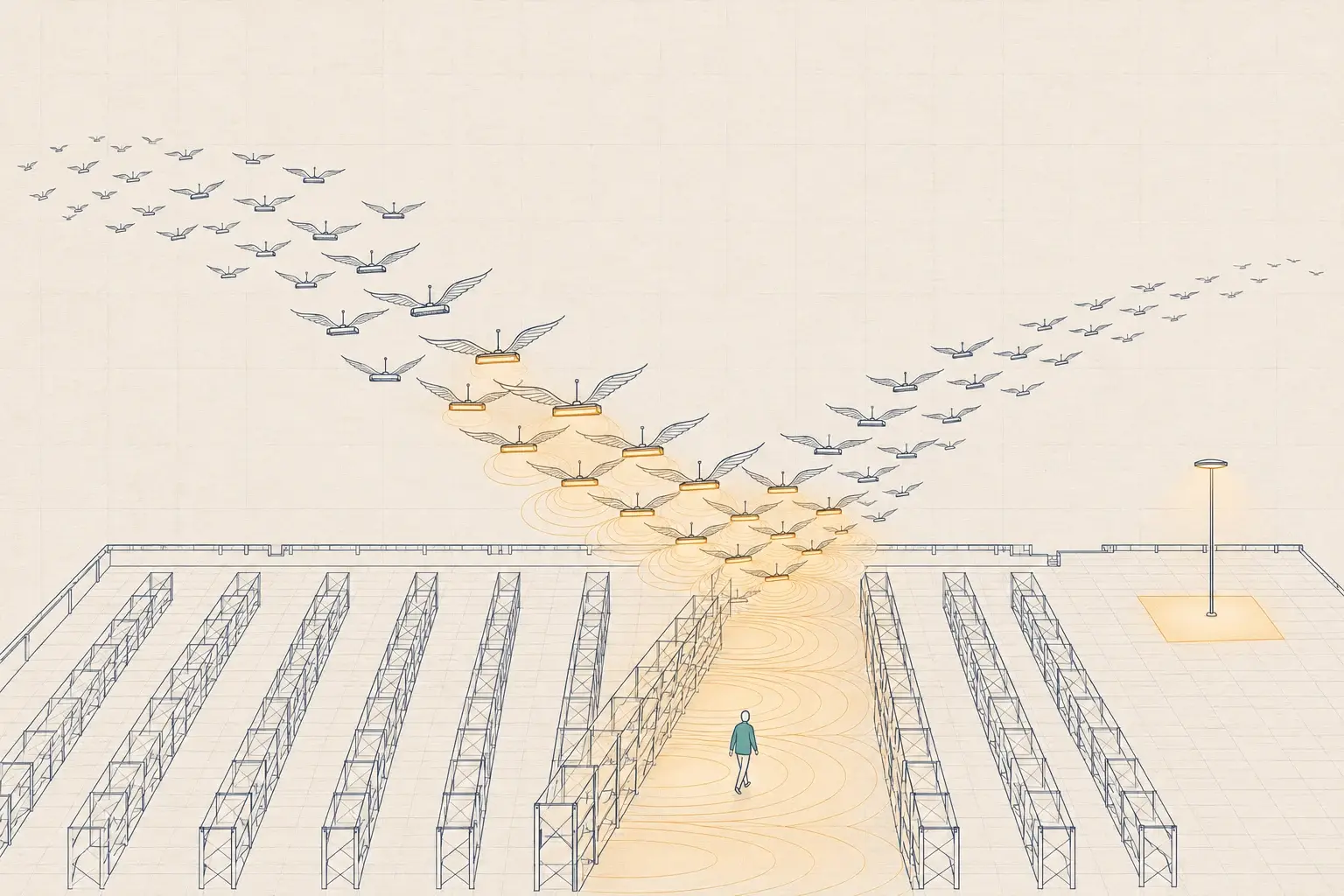
A cuckoo clock shaped like a sawtooth-roofed factory, with small doors open where carved workers file in and out; only the bays behind the open doors glow, and its weights are high-bay fixtures.
Plate A-01The plant already keeps time. The lights should read the same clock.

What makes these buildings hard

Shift-aware high-bay zoning, task tuning, and safety lighting for plants, with occupancy data handed to the HVAC system.

Condition 01

Lights follow the panel, not the shift

Many plants switch high-bay lighting by breaker or by bay. When second shift runs half the lines, the whole building stays lit, and third shift inherits whatever first shift left on.

Condition 02

High ceilings and hard conditions

Sensors at 30 feet or more have to detect people on foot and forklifts at speed, through dust, roof-deck heat, and vibration from overhead cranes.

Condition 03

Safety cannot be an afterthought

Egress paths, emergency lighting, and the areas around moving machinery need minimum light levels that no schedule or sensor is allowed to override.

Condition 04

Hazardous and washdown areas

Finishing rooms, spray booths, wood-dust areas, and washdown zones may need devices rated for the location, which rules out many standard sensors and wireless nodes.

What we'd do about it

Control strategies that hold up in this building type, in the order we usually apply them.

  1. Shift-aware zoning

    Zones follow production lines and work cells. Schedules carry each shift, weekends, and maintenance days, and occupancy trims vacant bays to a low level instead of off.

  2. Task tuning at stations

    Inspection and assembly stations get a higher, measured trim level; circulation gets less. The difference between the two is often where the savings are.

  3. Luminaire-level control in high-bay

    Fixture-integrated sensors give each high-bay its own eye, so a forklift lane or a single active cell lights up without waking the whole bay.

  4. The HVAC handshake

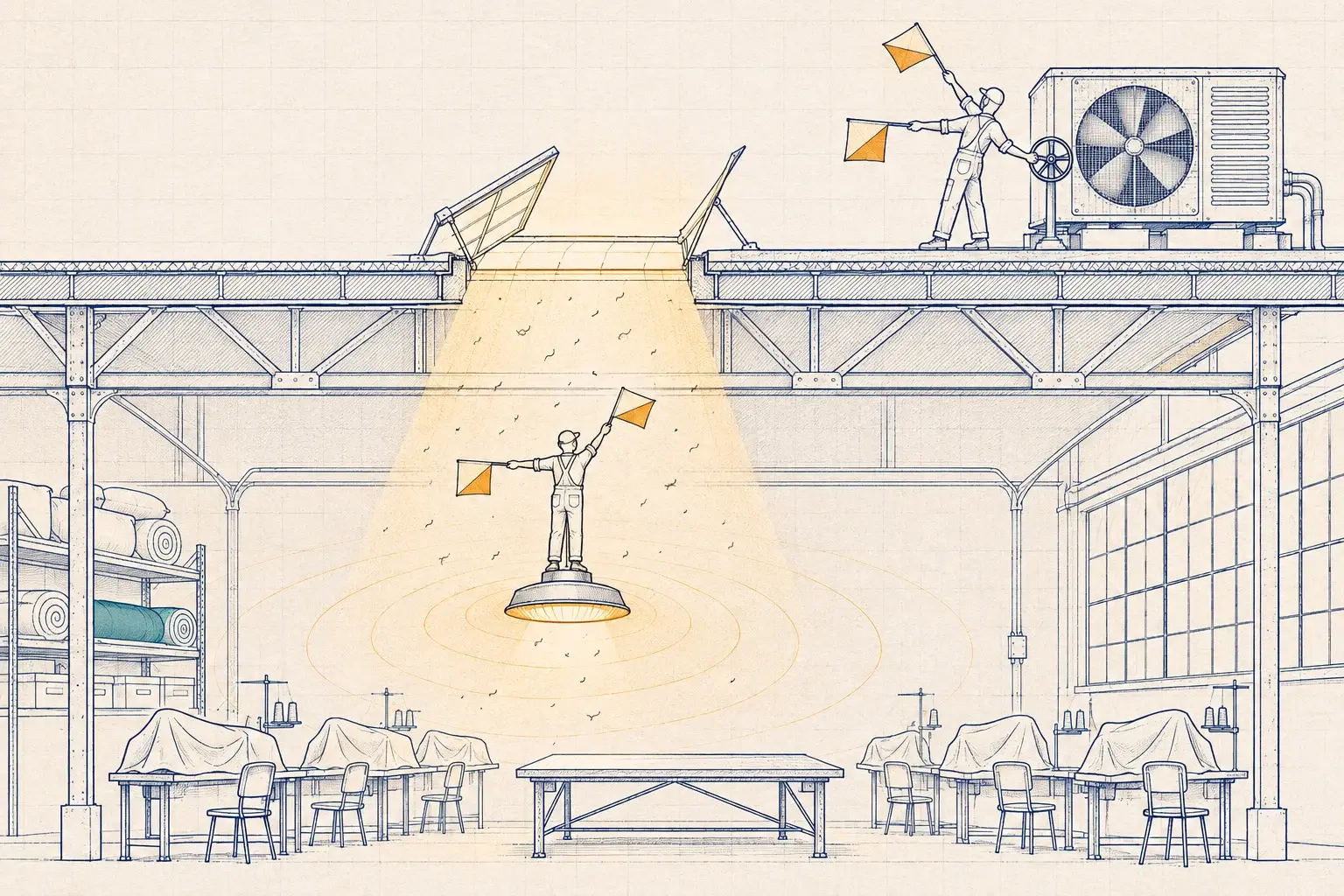
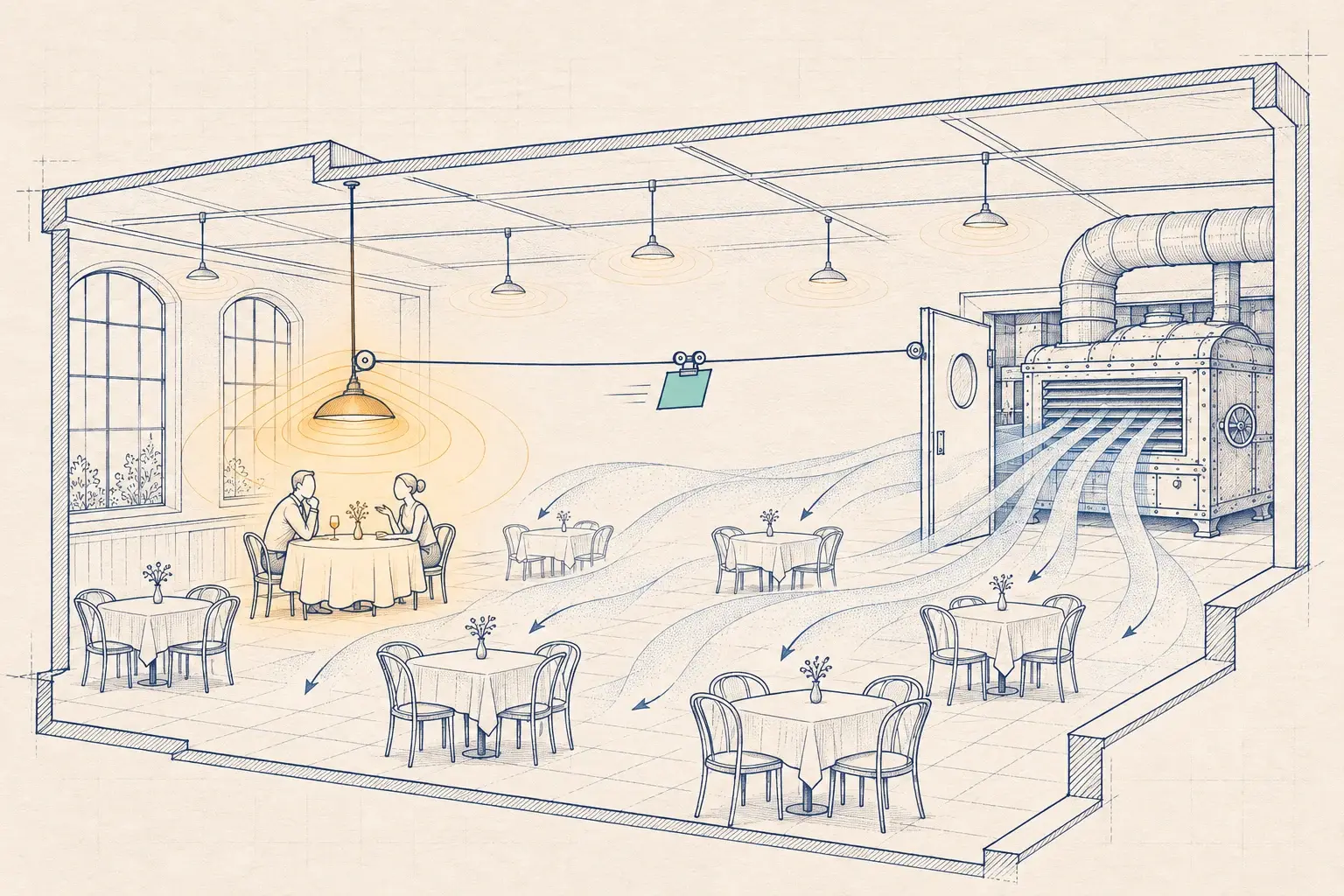
    Bay-level occupancy goes to the building automation system over BACnet, so unit heaters, fans, and make-up air in empty areas can set back where the mechanical design allows.

Typical control sequence by space type

Starting points for a plant's Sequence Book. Delays and levels are tuned on site and recorded at commissioning.

SpaceStrategyTypical setting or behaviorNotes
Production floor (high-bay)Shift schedule plus luminaire-level occupancyFull trimmed output while a shift runs; vacant bays drop to a low background level after a short delayNo automatic off while a shift is scheduled
Assembly and inspection stationsTask tuning with a local raiseHigher measured trim at stations; operators can raise light for close inspectionRaise times out at the end of the shift
Raw material and finished goods storageAisle occupancyLow level or off when vacant; full output as soon as a person or forklift entersSensors at aisle ends, not over racking
Shipping and receivingOccupancy plus daylightFixtures near open dock doors dim with daylight; occupancy covers staging lanesDock lights on their own control
Offices, break rooms, and restroomsVacancy or occupancyManual-on in offices, automatic on in restrooms; off after a short vacancy delaySame sequences as any office
Egress paths and emergency lightingFixed minimums with emergency transferNever dimmed below the required level; full output on loss of normal powerListed emergency control devices, tested at commissioning
Classified or washdown areasRated devices, simple controlSwitching or scheduling from outside the classified spaceRatings confirmed at submittal review
Yard and exteriorAstronomical schedule plus dimmingOn at dusk; dims after the last shift; motion raises light near doorsCoordinate levels with security cameras

Most plants don’t need new fixtures

In many plants across Northeast Mississippi and the Mid-South, the LED high-bays are already in. What’s missing is control: fixtures that know which shift is running, which bays are empty, and which station needs more light. So the real question is whether your plant needs a new lighting system or a smarter way to run the one it has. More often than not, it’s the second.

Where plants waste light

Plants here run on shifts. A furniture or upholstery plant may run one long shift with a cleaning crew after it; an automotive supplier may run three shifts with a skeleton crew on weekends. Either way, the lighting usually runs on one rule: on when the first person arrives, off when the last person leaves, if anyone remembers.

The waste shows up in predictable places:

  • Idle lines. Second shift runs two of five lines, and all five bays stay at full output.
  • Storage. Racks of raw material and finished goods are visited a few times an hour and lit continuously.
  • Over-lighting. New LED high-bays are often left at full output everywhere, including travel aisles that need far less light than the cutting tables.
  • Weekends and holidays. A maintenance crew needs three bays, and the schedule lights the building.

How we approach a plant

We start on the floor, during a running shift, with the production manager. We map lines, cells, storage, and travel paths, and note where people stand still and look closely at their work. That map becomes the zoning, not the electrical one-line diagram.

Then we write the sequence. On a production floor, our default is low, not off: vacant bays drop to a background level instead of going dark, because sightlines around moving equipment matter and full light snapping on beside a worker is a distraction. In storage, aisles can go off or nearly off, because there is nobody to surprise. At inspection stations, we set a higher trim and measure it, so quality never pays for the energy savings.

High-bay sensing is its own discipline. Mounting heights of 25 to 40 feet, roof-deck heat in a Mississippi July, sanding dust, and crane vibration all change what a sensor sees. We test candidate sensors in the Lytbit Lab at the mounting height and lens pattern we plan to use, before anything is ordered.

Harsh and hazardous areas

Finishing rooms, spray booths, dust collection, and washdown areas get their own treatment. If an area is classified, its fixtures and devices must be listed for that classification, and many wireless nodes and sensors are not. We usually control those areas from outside the classified space with simple switching or scheduling, and we say so on the drawings. Where moisture or washdown is the issue, we specify enclosure ratings and confirm them at submittal review.

The HVAC handshake

The occupancy data your lighting collects is useful beyond lighting. A bay that has been empty for an hour doesn’t need its unit heaters at full setpoint or its make-up air at full flow, as long as the mechanical design allows a setback. We map bay-level occupancy to BACnet points the building automation system can read, agree on the logic with your mechanical engineer or controls contractor, and test the handshake during commissioning. DLC’s NLC 5.2 requirements now include HVAC integration, which shows where the industry is heading.

Incentives and code

Depending on location, plants in our region are served by TVA local power companies, Entergy Mississippi, or Mississippi Power. TVA EnergyRight requires pre-approval before equipment is purchased and gives additional credit for networked controls, so the order of operations matters. We prepare the application package and coordinate with your local power company and program staff before anything is ordered, and our incentive management service carries the paperwork through to payment.

On the code side, a lighting alteration in an existing plant can trigger control requirements for the altered area. Which energy code edition applies varies by jurisdiction, so we confirm it with the authority having jurisdiction on every project. Recent editions, including ASHRAE 90.1-2022 and the 2024 IECC, require functional testing of lighting controls, and we provide that documentation on every job.

What we’d do first

Walk one shift change with your production manager. The hour around a shift change tells us more about a plant’s lighting than a month of drawings. For a structured version, start with a Baseline Assessment, or read how we’d approach an upholstery plant in our representative scenario.
FAQ

Questions we hear often

Still unsure? Write to sales@lytbit.com and a person will answer within one business day.

Should high-bay lights ever turn fully off in a plant?

In storage and low-traffic areas, yes, if the sensors can reliably see people approaching. On a running production floor, we prefer a low background level: it keeps sightlines around machinery and avoids lights snapping on beside a worker. The Sequence Book records which zones may go off and which may not.

Can you add controls to LED high-bays we installed a few years ago?

Usually. If the existing fixtures have dimmable drivers, we can add fixture-mounted sensors or wireless nodes instead of replacing fixtures. Our article on LED-to-LED retrofits covers when that pays off and when it doesn't.

What about areas with combustible dust or flammable vapors?

Classified locations need fixtures and devices listed for that classification. We map those areas during the survey and design them separately, usually with simple controls located outside the classified space. We never treat them like the rest of the floor.

How does lighting data help the HVAC system?

Occupancy sensors already know which bays are empty. Shared over BACnet, that signal lets the mechanical system set back heaters, fans, or make-up air where the design permits. Our BMS integration service maps those points and tests them end to end.

Will the work disrupt production?

We survey during running shifts, install in planned downtime, and test after hours or zone by zone. Wireless retrofits need little new wiring, which keeps each outage short.

Running more shifts than your lights know about?

Send us your shift schedule and a floor plan. We'll show you where the building is lit for people who aren't there.