Operate & Finance

Incentive and rebate management

Utility incentives can change the economics of a controls project, but only if the paperwork and the timing are right. We prepare the application package, select products that qualify, and keep the project inside the program's rules from pre-approval to payment.

ProjectLytbit · Smart lighting & IoT
SheetE-15
Rev26.11
DisciplineIncentives
DrawnLytbit Engineering
Scale1 : 1
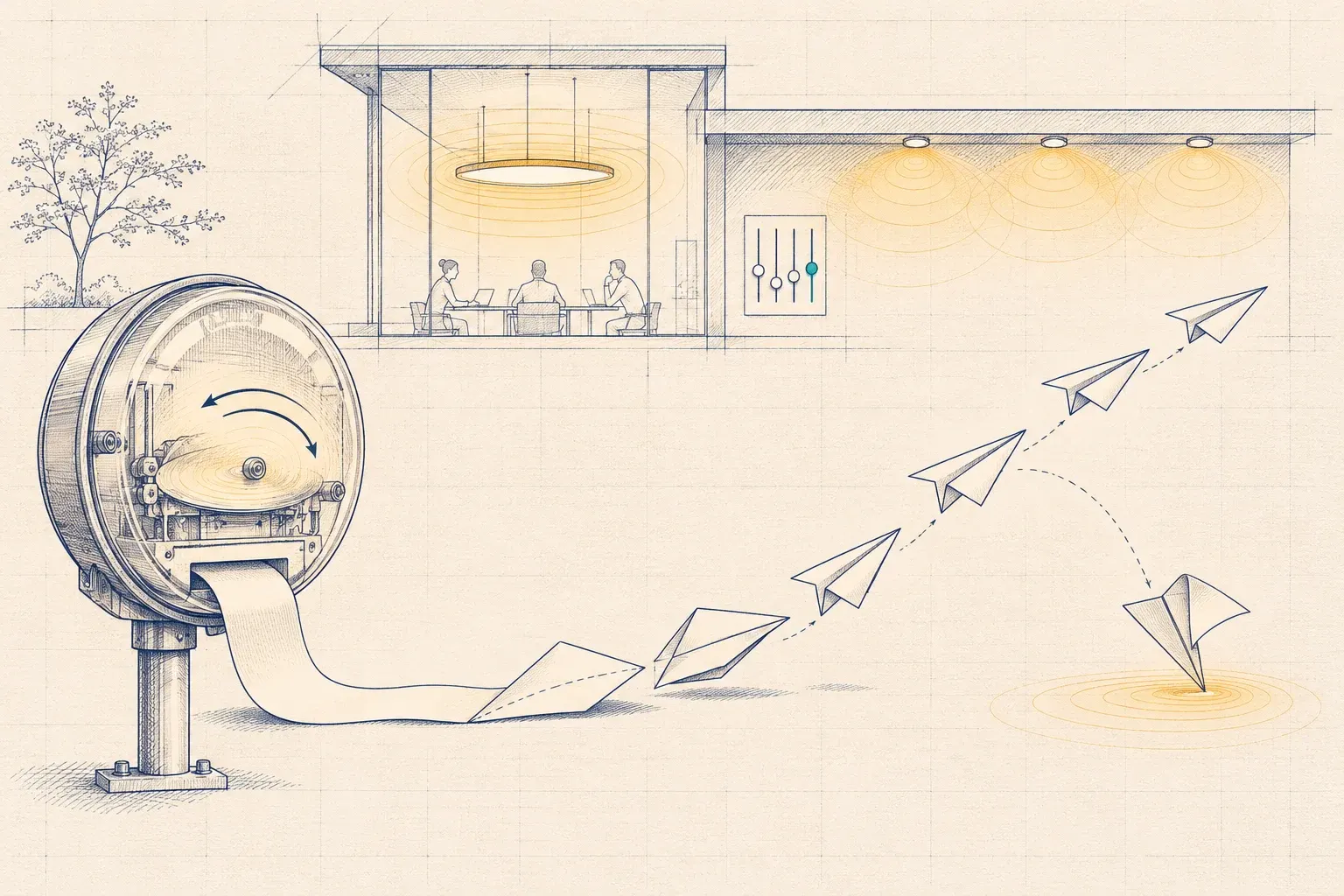
An electric meter spins backwards and prints a long paper strip that folds itself into paper airplanes; most fly away, but one with an unfolded corner is falling.
Plate E-15One missed fold, and the rebate never leaves the ground.

What changes when we're done

Applications, product selection, measurement and timing for TVA EnergyRight, Entergy Mississippi, Mississippi Power and MLGW incentive programs.

  • Pre-approval in place before any work starts, so eligibility isn't lost on the first day
  • Products confirmed on the DLC Qualified Products List when it counts: at specification and again before ordering
  • Networked and luminaire-level controls credited where the program rewards them
  • A complete closeout package, so payment isn't held up by a missing document

What's included

Every engagement is scoped to the building, but these are the parts we won't skip.

E-15.01

Program screening

We identify which programs apply to your site based on your power company, rate class, building type and scope, and which track fits: standard lighting, controls, new construction or small business.

E-15.02

Application package

Fixture and controls inventories, existing and proposed wattages, operating hours, product data sheets, QPL listings and drawings, prepared in the format each program expects.

E-15.03

Pre-approval management

We prepare and track the pre-approval request, coordinate with your local power company and the program's approved partners, and tell your contractor in writing when work may start.

E-15.04

DLC QPL product selection

Specifications name qualifying products and acceptable alternates, and we check every substitution during submittal review, before anything is ordered.

E-15.05

Measurement and documentation

Pre- and post-installation inventories, photos and operating hours, plus metered data from Lytbit Ledger where a program accepts or requires it.

E-15.06

Closeout

Invoices, commissioning records and inspection scheduling assembled into a closeout package and tracked until the incentive is paid.

How it works

The same steps on every project, so you always know what happens next and what you'll receive.

  1. Screen

    During the Baseline Assessment or design, we identify the programs that apply and their current rules, because programs change terms and budgets from year to year.

  2. Design to qualify

    Controls design and product selection follow the program's requirements, including networked controls where a program gives them extra credit.

  3. Apply and wait

    We submit the package through the channel the program requires and follow it until pre-approval is issued. No work starts before then.

  4. Guard the scope

    During construction we check submittals and substitutions against the approved application, because a swapped product can cost eligibility.

  5. Close out

    We assemble the post-installation documentation, support any inspection and follow the claim through to payment.

You receive

Deliverables

  • Program screening memo: applicable programs, tracks, deadlines and requirements
  • Complete application package with inventories, product data and QPL confirmations
  • Pre-approval tracker and a written notice to proceed
  • Submittal and substitution review log
  • Closeout package and claim status record

How it's scoped

Included in Lytbit design and turnkey projects; available as a standalone fixed-fee service for projects designed or installed by others

  • Standalone fees are scoped from the number of programs, sites and measures, never as a share of the incentive.
  • We can't guarantee approval or amounts, because programs set and change their own terms. We do commit to a complete package delivered on the schedule we agree with you.
  • Where a program routes applications through approved partners, we prepare the package and coordinate with them and with your local power company on your behalf.

Good fit if

Who this is for

  • You're planning a lighting or controls project in TVA, Entergy Mississippi, Mississippi Power or MLGW territory
  • A previous project missed an incentive because work started before pre-approval
  • Your contractor's quote assumes a rebate nobody has applied for yet
  • You manage several sites served by different utilities

Incentives are a schedule problem

Most lost incentives aren’t rejected. They’re forfeited. Work started before pre-approval, a contractor substituted a fixture that isn’t on the Qualified Products List, or the closeout package went in missing a document and the program’s deadline passed. The money was available; the project fell outside the rules.

The decision that matters is who will manage the incentive process on your project, and when that work has to start. The answer to “when” is almost always earlier than people expect: at design, not at installation.

Programs in our region

Utility or program Where What to know
TVA EnergyRight, through your local power company North Mississippi (including Tupelo Water & Light), North Alabama and other TVA local power companies Pre-approval before work starts; applications go through approved partners; extra credit for networked controls; separate tracks for standard lighting and new construction
MLGW with TVA EnergyRight Memphis and Shelby County MLGW is a TVA local power company, so EnergyRight’s rules apply
Entergy Mississippi Solutions for Business Entergy Mississippi service territory Commercial programs, including a small-business track; requirements vary by track
Mississippi Power commercial programs Mississippi Power service territory in southeast Mississippi Commercial and industrial programs; networked lighting controls are listed as eligible in the large commercial and industrial program

Program terms, budgets and eligible measures change, sometimes mid-year. We confirm the current rules with program staff at the start of each project and again before submission, which is also why we don’t publish incentive amounts.

How we work with TVA EnergyRight

TVA EnergyRight routes commercial applications through approved partners and requires pre-approval before work begins. We prepare the complete application package (inventories, wattages, operating hours, product data, QPL confirmations and drawings) and coordinate with your local power company and the program’s approved partners so the submission is complete the first time. Then we hold the project to a clear line: no fixture is ordered and no ceiling tile is lifted until pre-approval is in writing.

EnergyRight gives extra credit for networked lighting controls. That makes controls design a financial decision as much as a technical one, and it’s one reason we design controls and incentives together rather than one after the other. Our post on getting the most from TVA EnergyRight walks through the process step by step.

Product selection and timing on the DLC QPL

Most lighting and controls incentives depend on products listed on the DesignLights Consortium Qualified Products List. Three timing issues catch projects out:

  1. Listings change. Products are added and delisted, and the networked controls requirements have moved to NLC 5.2. We check the listing when we specify and again before ordering.
  2. Substitutions. A contractor’s “or equal” may not be listed. We review submittals against the approved application before purchase.
  3. Program windows. Pre-approvals often carry a completion deadline. We build it into the construction schedule, with margin.

Measurement and documentation

Programs pay on evidence. We document existing conditions with fixture counts, wattages, photos and operating hours, and the finished project the same way. Where a program accepts or requires metered data, Lytbit Ledger provides it. Records from our commissioning work double as proof that the controls were installed and configured as claimed.

A note on 179D

The federal 179D deduction is not available for property whose construction begins after June 30, 2026. It may still apply to projects already underway. The rules are detailed, so consult your tax advisor; we can provide the energy documentation they ask for.

Stacking with financing

Incentives work alongside lighting-as-a-service and other financing. The agreement decides who receives the incentive and how it reduces the financed amount, so settle that before the application goes in. If you’re not sure where to start, a Baseline Assessment includes program screening.
FAQ

Questions we hear often

Still unsure? Write to sales@lytbit.com and a person will answer within one business day.

Do we have to apply before work starts?

For TVA EnergyRight, yes. Pre-approval is required before work begins, and starting early can make the project ineligible. Other programs set their own timing rules. Our default is to treat every program as if pre-approval were required until we've confirmed otherwise in writing.

Why do networked controls matter for incentives?

Many programs credit networked lighting controls beyond the fixture upgrade itself, and TVA EnergyRight gives extra credit for them. DLC estimates average savings of about 49% for NLC and 63% for NLC with LLLC, which is why programs increasingly reward controls and not fixtures alone.

How much will we receive?

It depends on the program, the measures and the year, so we don't publish figures. The screening memo estimates the incentive for your specific scope under the program's current rules before you commit to anything.

Can we still use the 179D tax deduction?

The 179D deduction is not available for property whose construction begins after June 30, 2026. It may still apply to projects already underway. Eligibility turns on details such as when construction began, so consult your tax advisor. We can supply the energy documentation they ask for.

What if our contractor substitutes a different fixture?

That's one of the most common ways to lose an incentive. A substitute must also qualify, usually by being on the DLC QPL, and some programs require the change to be approved. We review substitutions against the approved application before anything is ordered.

Do incentives work with lighting-as-a-service?

Yes. The agreement decides who receives the incentive, and it usually reduces the financed amount. See lighting-as-a-service.

Planning a project in TVA, Entergy or Mississippi Power territory?

Tell us your power company, the building and when you'd like to start. We'll tell you which programs apply and what has to happen first.