Resources · Tool

Lighting controls savings estimator

Enter your floor area, operating hours, lighting power and electricity rate, choose the strategies you're considering, and get a savings range with the assumptions in plain view. It's a starting point, not a quote.

ProjectLytbit · Smart lighting & IoT
SheetR-01
Rev26.11
DisciplineEstimating
DrawnLytbit Engineering
Scale1 : 1
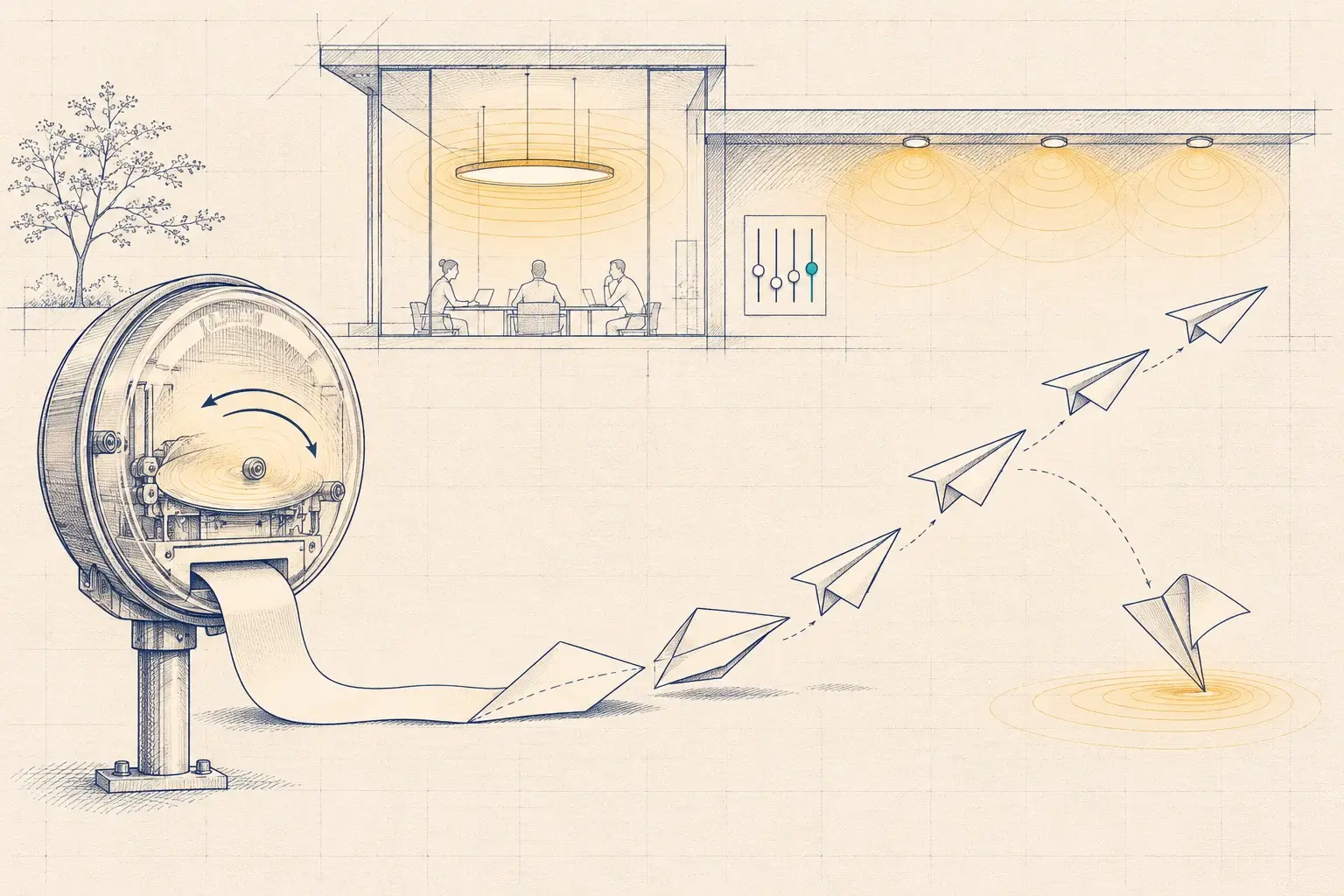
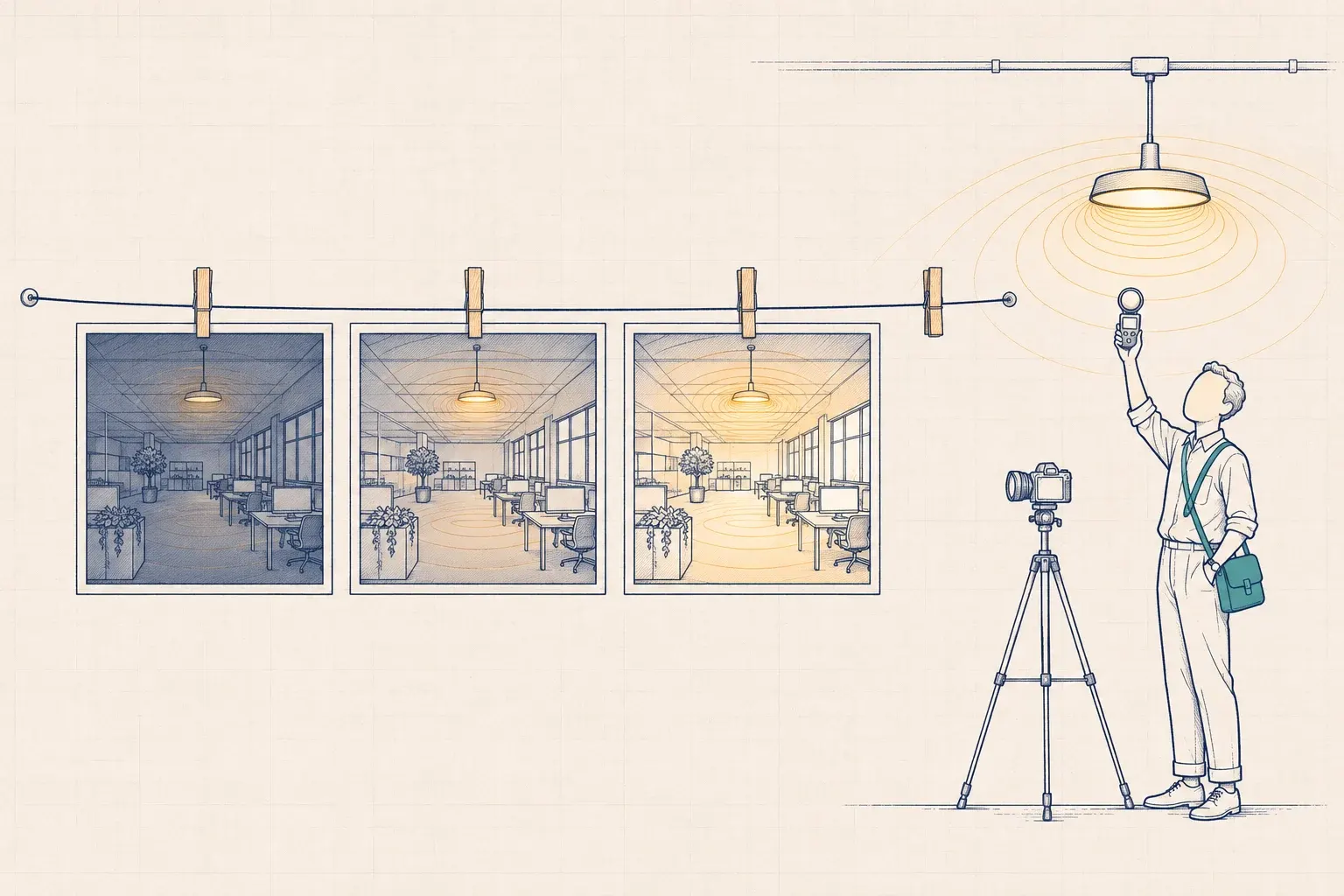
Three differently exposed prints of the same office floor hang on a line beside a camera on a tripod, while a small photographer holds a light meter up to a ceiling fixture.
Plate R-01Three exposures are honest; a meter reading tells you which one to print.

Your building

Roughly 0.5–0.8 for LED, 0.9–1.3 for older fluorescent.
Your blended rate, from a recent bill.
Control strategies

Estimated annual savings

0–0 kWh / year

0 – 0 per year at your rate

Baseline use
0 kWh / year
Combined reduction
0–0% of lighting energy
Strategies
None selected

Lighting-to-HVAC occupancy setback: Applies to HVAC energy in zones that receive lighting occupancy data, not to lighting, so it is shown as a separate note and never added to the lighting result. Depends on how the HVAC is zoned and what ventilation rules allow.

Turn this into a measured baseline

How to read the result

The estimator multiplies floor area by lighting power density to get your connected lighting load, then multiplies that by annual operating hours to get annual lighting energy. It applies the strategies you select and returns a range. The low end assumes your building behaves like a busy one; the high end, like a quiet one.

A worked example: a 100,000 sq ft office at the default 0.8 W/sq ft has an 80 kW lighting load. At 3,000 hours a year, that’s 240,000 kWh. Select occupancy sensing and high-end trim, and the estimator combines them:

  • Low: 1 − (1 − 0.15) × (1 − 0.10) ≈ 24%, or about 56,000 kWh a year
  • High: 1 − (1 − 0.30) × (1 − 0.20) = 44%, or about 106,000 kWh a year

Multiply by your blended rate to see the cost range.

Why the strategies don’t simply add up

Every strategy works on the energy the others leave behind. If occupancy sensing turns a room off for half the day, daylight harvesting can only save during the half that’s still lit. Adding percentages would promise savings on energy that’s already gone. That’s why three 30% strategies combine to about 66%, not 90%, and why luminaire-level control replaces occupancy, daylight and trim in the math instead of stacking on top of them.

What the estimate leaves out

  • Demand charges. Trim lowers peak kW, which can reduce demand charges. The estimator counts only kWh.
  • New fixtures. If you’d also replace fluorescent or early LED fixtures, the wattage reduction comes on top of controls savings. See LED-to-LED retrofits for when that pays.
  • Incentives. Programs such as TVA EnergyRight give extra credit for networked controls, but rules change and pre-approval comes before any work. Our incentive management service handles the application.
  • Heat from lighting. Less lighting energy means a little less cooling in summer and a little more heating in winter. Occupancy-based HVAC setback is a separate and usually larger effect, so it appears as a note.
  • Maintenance and data. Fault alerts, utilization data and fewer service calls have value the tool doesn’t price.
  • Code requirements. Some strategies may be required anyway when you renovate. Which energy-code edition applies depends on your jurisdiction, and we confirm it with the authority having jurisdiction.

Next step: swap our assumptions for your measurements

The two inputs that move the result most are operating hours and how often spaces are actually empty, and both are guesses until someone measures them. A Baseline Assessment measures them: a site walk, a fixture and circuit inventory, utility bill analysis, and short-term logging where hours are uncertain. You get a projection you can take to a CFO or put in an incentive application. The fee is fixed, and it’s credited toward the project if you go ahead.

If you’d rather talk through your numbers first, start a project with the estimator’s output and we’ll tell you which assumption we’d question first.
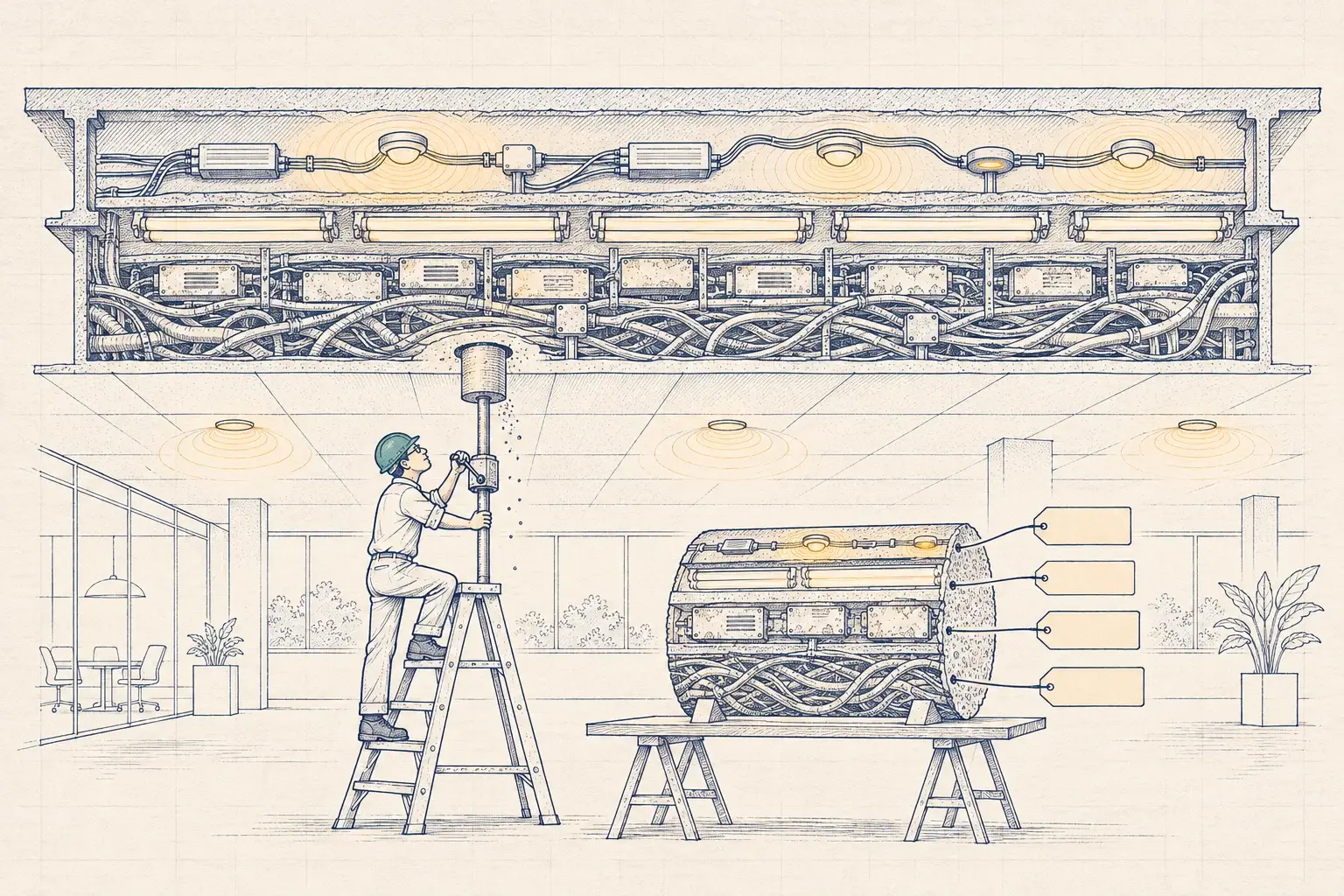
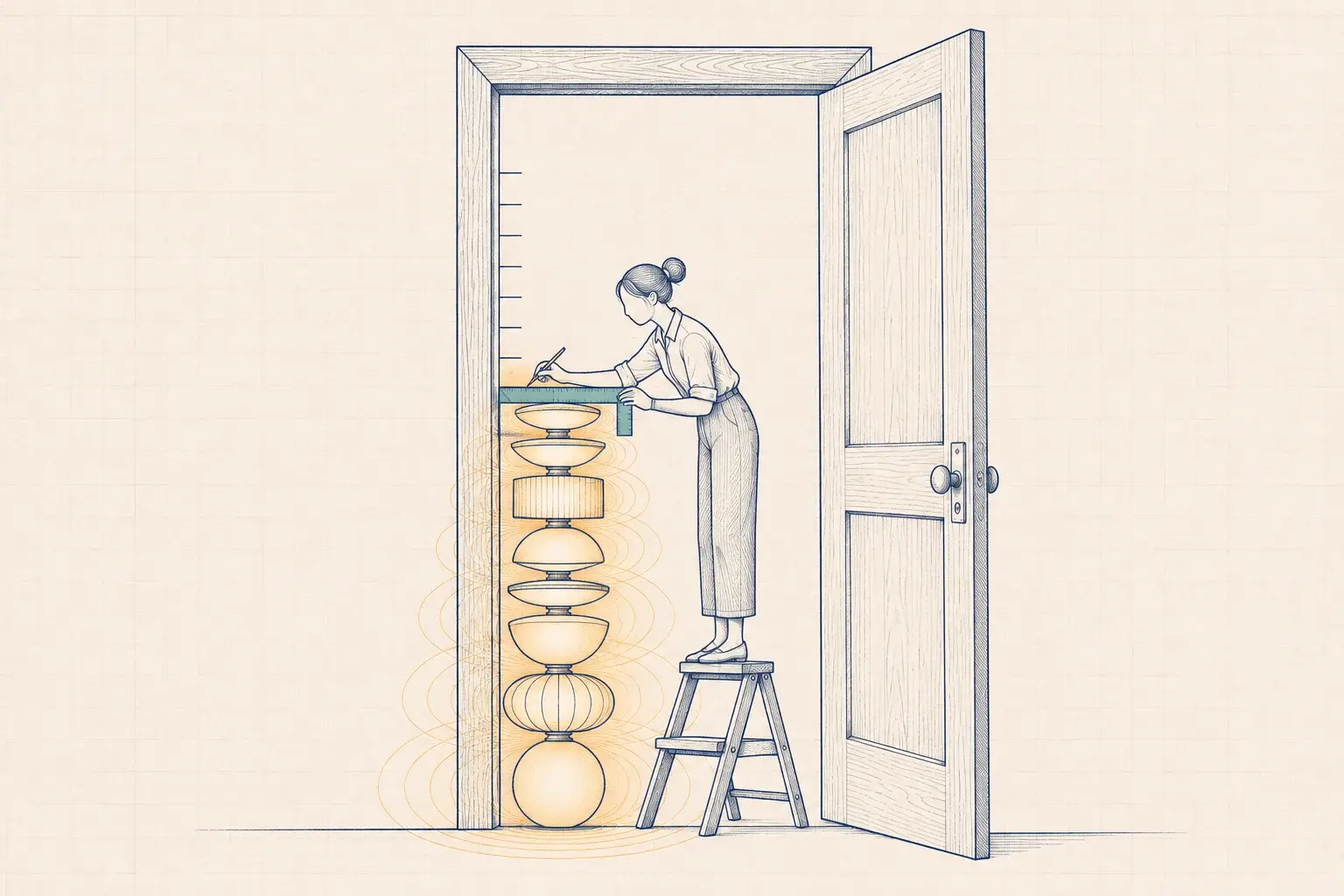
What the estimator assumes

AssumptionValueWhy it matters
Operating hoursDefaults by building type, 2,300 to 8,760 h/yrOffice 3,000; K-12 school 2,300; retail 4,200; outpatient clinic 3,500; two-shift manufacturing 5,000; two-shift warehouse 5,500; continuous 8,760. Replace them with your own hours if you know them, because this input moves the result more than any other.
Lighting power densityDefaults of 0.6 to 1.0 W/sq ft by building typeThe defaults describe an existing building with a mix of LED and fluorescent lighting. If you know your connected lighting load, divide it by the floor area and enter that instead.
Electricity rateYour blended rate per kWhDivide a recent bill's total charges by its kWh. The estimator multiplies avoided kWh by this rate. It does not model demand charges, which trim and demand response can also lower.
How strategies combineMultiplicatively, not additivelyEach strategy acts on the energy the others leave behind: remaining load = (1 − s1) × (1 − s2) × … Three strategies of 30% each combine to about 66%, not 90%.
Luminaire-level controlReplaces occupancy, daylight and trimLLLC already includes occupancy sensing, daylight response and trim at every fixture. When it is selected, the estimator uses the LLLC range in place of those three strategies and combines it only with scheduling.
HVAC setbackShown separately, never addedLighting occupancy data can drive HVAC setback, but those savings apply to HVAC energy, which this tool doesn't ask for. The illustrative range appears as a note beside the lighting result.
ResultsIllustrative ranges, not quotesLow and high values reflect typical variation between buildings. They are not a proposal, a guarantee or an incentive estimate. A Baseline Assessment replaces these assumptions with measurements.

Want a range you can take to finance?

A Baseline Assessment replaces the estimator's assumptions with your hours, your fixtures and your bills. The fixed fee is credited to the project if you go ahead.