Standardize, and how far to centralize?
The question for a chain is whether to standardize lighting controls across your stores, and how much to run centrally. A single store can live on a well-set time clock. Once you have a dozen, the question becomes how you know what every store is doing at 2 a.m.
Sales floor and back of house are different buildings
Retail lighting has a rule that offices don’t: during open hours, the sales floor is part of the merchandise. Customers read a dim aisle as a closed one, and they judge color and finish under the light you give them. So we don’t use occupancy dimming on the sales floor while the store is open.
The savings on the sales floor come from elsewhere:
- High-end trim. New LED fixtures are often installed at full output everywhere. Trimming to a measured target, aisle by aisle, saves energy every open hour without anyone noticing.
- Daylight at the storefront. Fixtures near the glass dim when daylight is strong, tuned with the window displays in place.
- Levels outside open hours. Stocking crews before opening and cleaning crews after close don’t need full display levels.
- Overnight. Off, or a security level set by your loss-prevention policy.
Back of house runs on occupancy and vacancy like any other building: stockrooms, receiving, offices, break rooms, and restrooms.
Store hours and the calendar problem
Store hours change more often than most building schedules: holiday hours, inventory nights, early openings, and seasonal shifts. When each store’s schedule lives in a local time clock, every change means a phone call and a ladder. We put schedules on a central calendar with store-level exceptions, and we test that a holiday change made once actually reaches every store.
Multi-site standards and roll-out
Most portfolios are a mix: a current prototype, older stores built to earlier standards, and acquired stores built to someone else’s. Our approach:
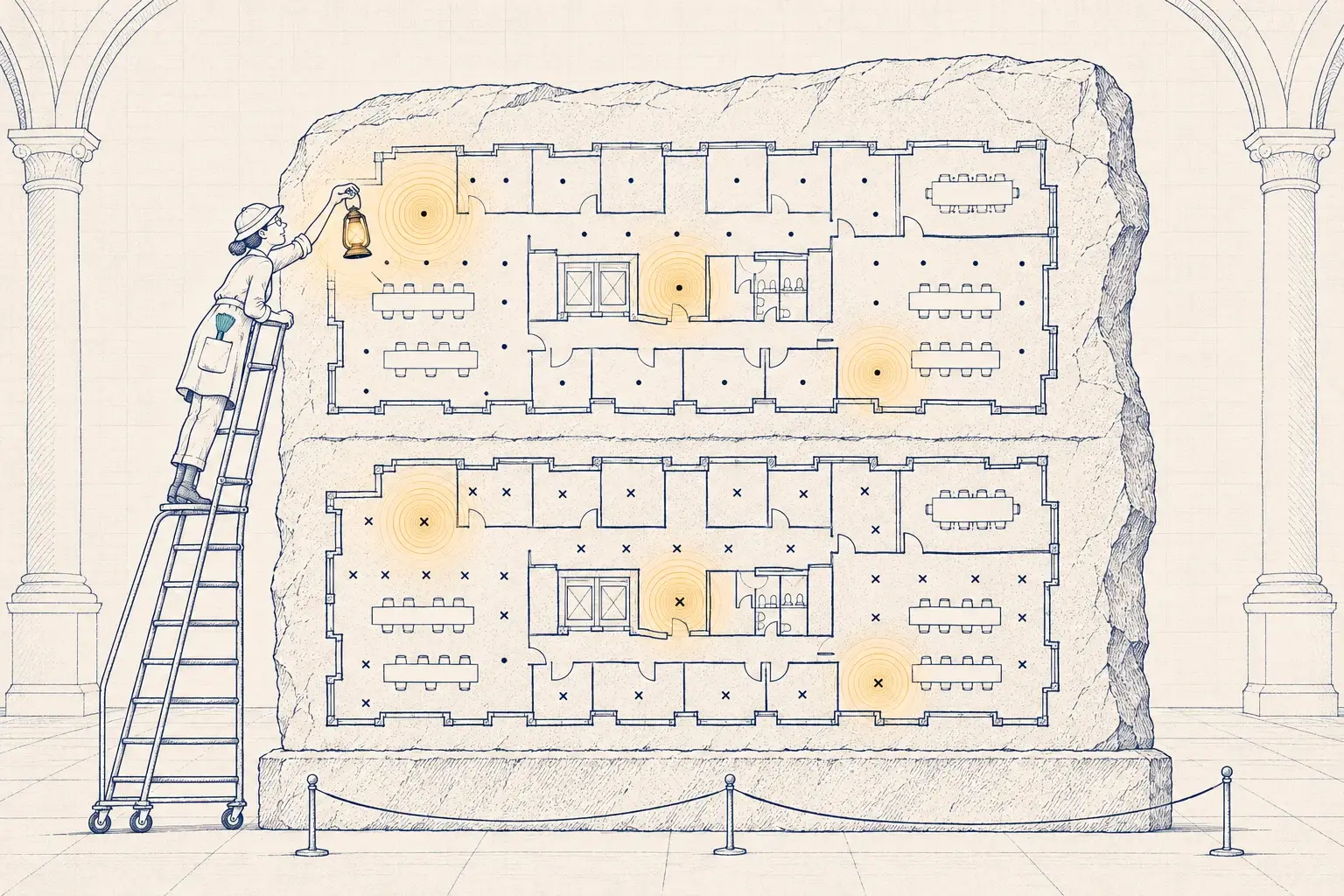
- Survey a sample. We visit representative stores of each vintage and collect utility data for all of them.
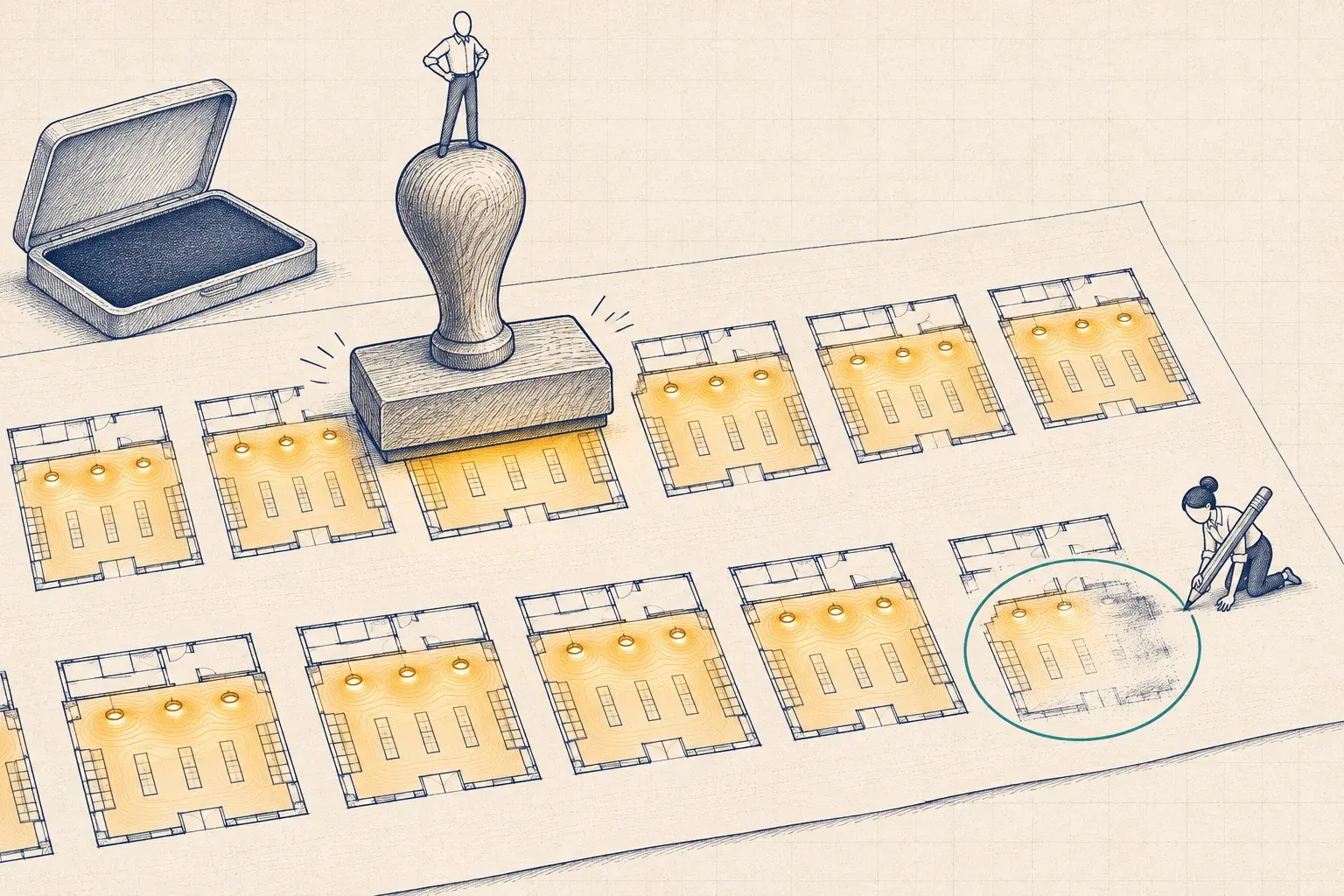
- Write the standard. Sequences, schedules, naming, device types, and a commissioning script, with variants for older stores instead of exceptions.
- Bench and pilot. We test the devices together in the Lytbit Lab, then install at one or two pilot stores and adjust.
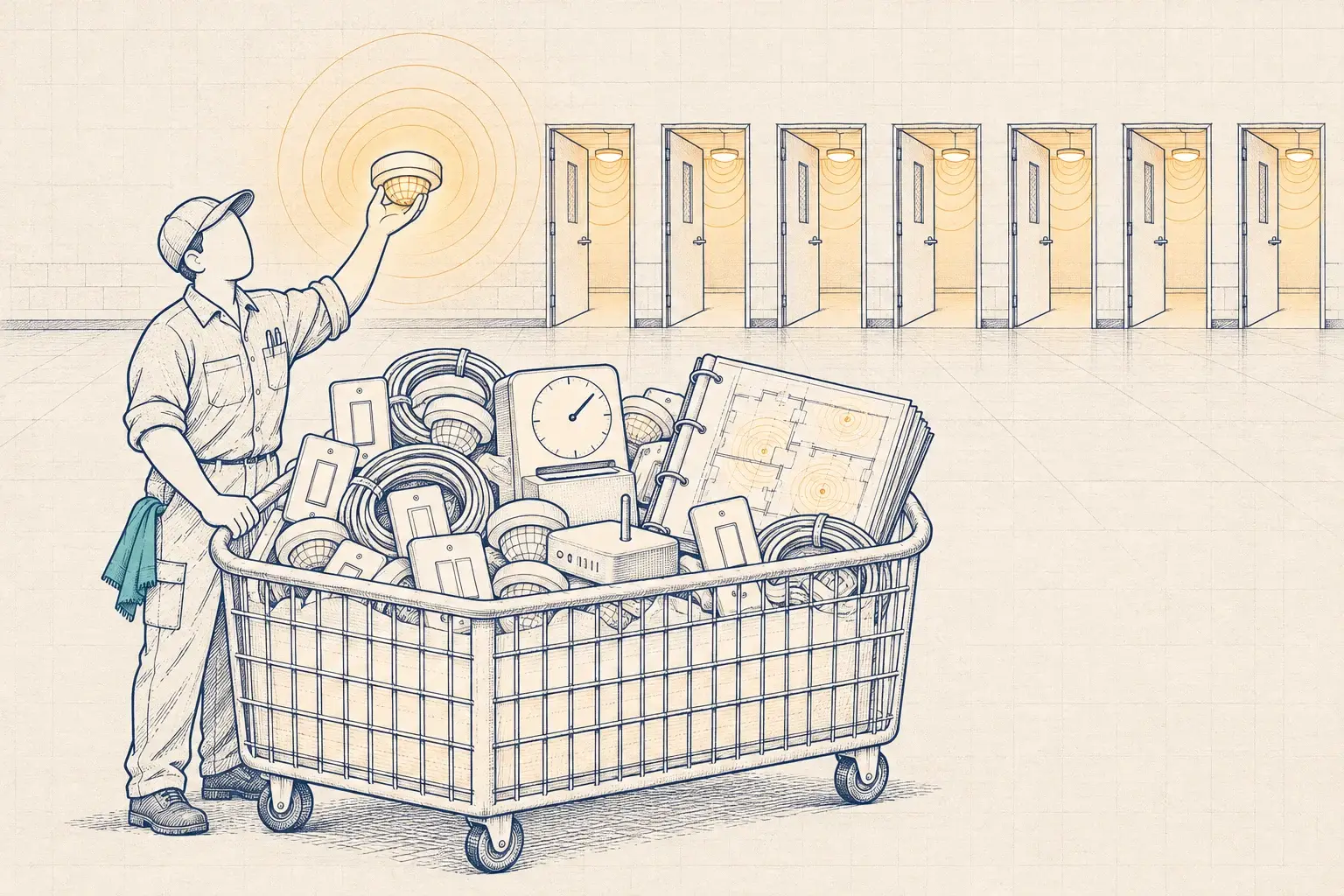
- Roll out. Local electrical contractors install to the standard kit, and we verify each store remotely against the script, visiting where the data says we should.
That keeps travel to a minimum and results consistent, whether you have eight stores in Mississippi or eighty across the South.
Central monitoring
Every store reports to one Lytbit Ledger workspace. Ledger Watch flags the store that stayed lit after close, the failed sign photocell that runs the sign at noon, and the schedule someone edited locally. Ledger Meter tracks energy by store, so you can compare stores of the same prototype and find the outliers. Our managed monitoring tiers set who responds to alerts and how fast.
Exterior signage and parking
Signs, facades, and parking lots often run longer than anything inside. We put them on the store calendar: on at dusk, off or reduced after close, with a security level agreed with your loss-prevention team. Check ownership first, because a pylon sign may belong to the landlord, and parking poles may belong to the landlord or the utility.
Incentives and code
A portfolio in our region may span TVA local power companies, Entergy Mississippi, and Mississippi Power, each with its own process. TVA EnergyRight requires pre-approval before purchase and gives additional credit for networked controls. We prepare applications utility by utility and coordinate with each local power company and its program staff.
Energy codes differ by state and jurisdiction. Recent editions generally require exterior lighting to dim or turn off after business hours, with exceptions. We confirm the applicable edition with each authority having jurisdiction and build state variants into the standard, including a Title 24 2025 variant for stores in California.
What we’d do first
Pull a year of utility bills for every store and rank them by kWh per square foot. The outliers tell us where to survey first.