Automatic, staff-controlled, or patient-controlled?
The question for a clinic is which spaces in your clinic or outpatient building get automatic controls, which stay under staff or patient control, and where tunable white is worth paying for. Getting that split right matters more in healthcare than in any other building type we work in.
Two clocks in one building
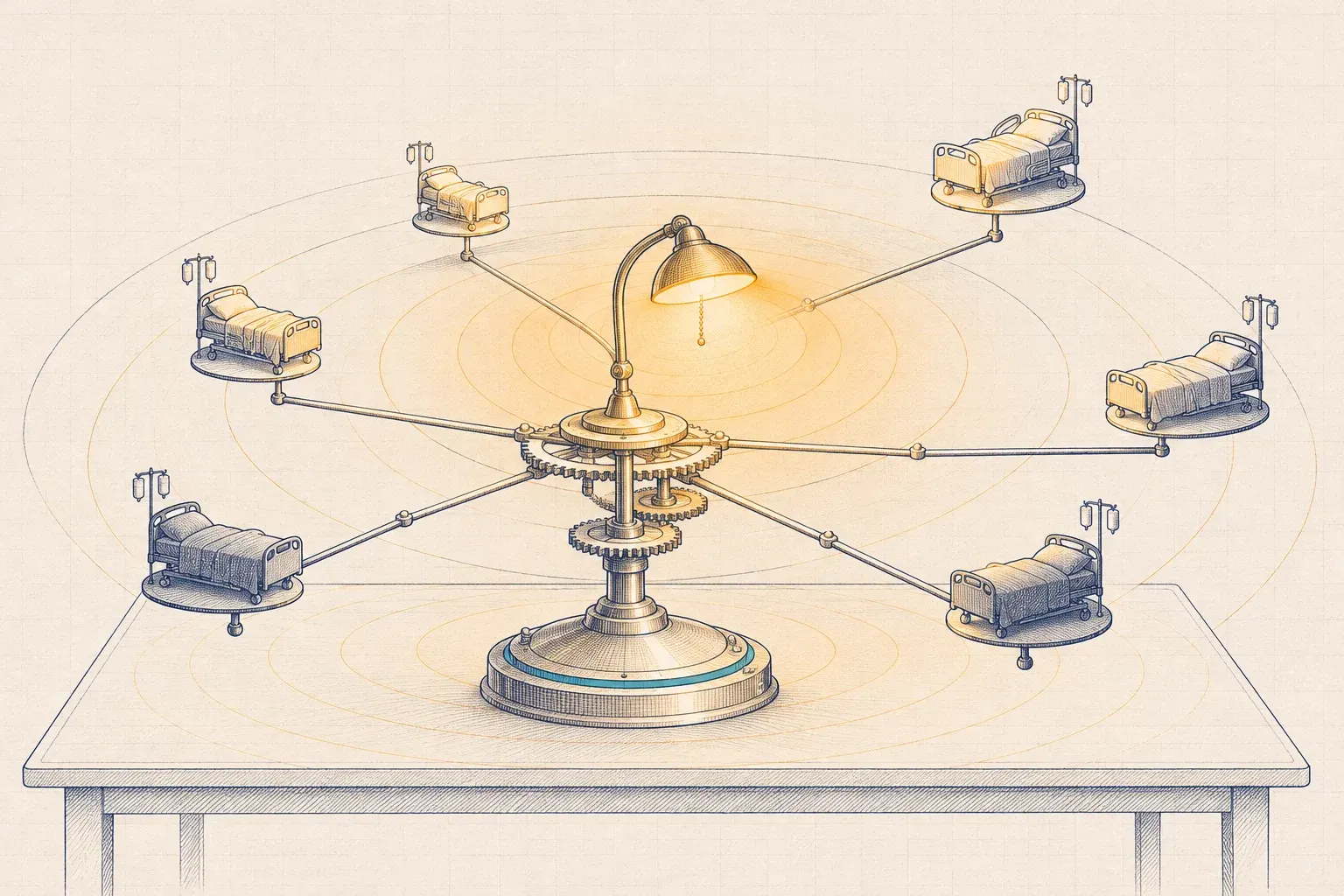
An outpatient clinic, urgent care center, or medical office building often runs two schedules at once. Front-of-house spaces open and close like an office. Imaging, urgent care, labs, and nurse stations may run late or around the clock. Where patients stay overnight, they are trying to rest a few feet from staff who are working.
One building-wide schedule never fits. We write sequences room type by room type, and we separate three kinds of control:
- Automatic control for spaces where nobody is affected by the light changing: corridors at night, storage, staff offices, and parking.
- Staff control with timeouts for exam and procedure lighting, so a forgotten exam scene doesn’t run all night.
- Patient control for night and reading lights, which no sensor or schedule overrides.
Nurse stations and night mode
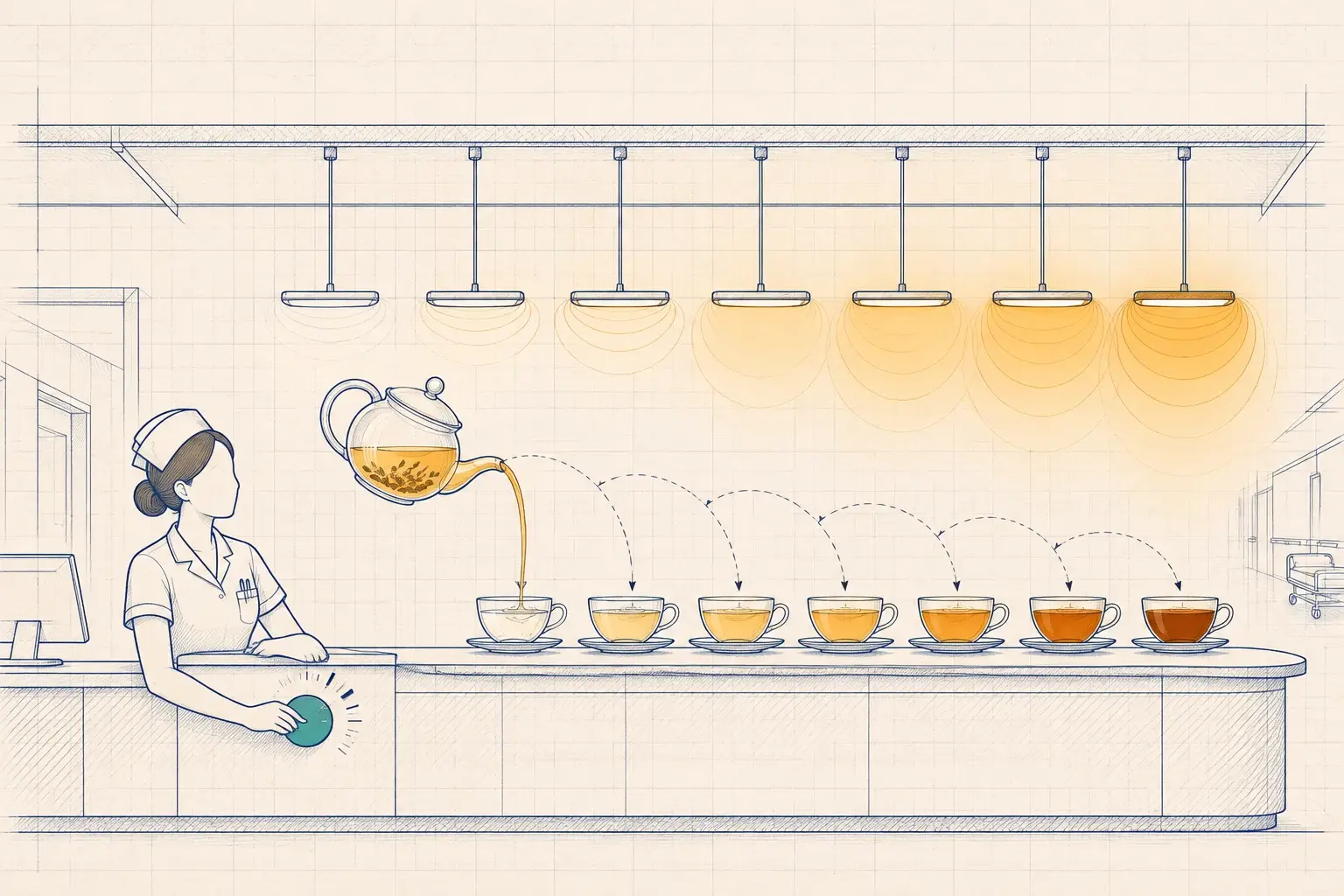
Nurse stations are the hardest small space to light well. Staff need clear task light to chart and prepare medications at 3 a.m., while patients down the hall need a dim corridor. Our usual answer is a scheduled night mode: general and corridor light dims, task light at the desk holds, and nothing throws glare into patient rooms. Staff can raise the light with one button for an event, and it returns to night mode on its own.
Tunable white, with an energy budget
Tunable white fixtures shift color temperature through the day, cooler and brighter in the morning and warmer in the evening. ANSI/IES RP-46-25 gives design guidance for daytime interiors and the non-visual effects of light. We use tunable white where people spend long stretches: waiting areas, staff break rooms, and infusion and recovery spaces. We watch two costs. Tunable systems add commissioning work, and a DOE study found that meeting circadian targets can raise lighting energy considerably when the design strategy is poor. We model both before recommending it through our human-centric lighting service.
Life safety comes first
Emergency lighting has to reach required levels when normal power fails, regardless of what a sensor, dimmer, or schedule was doing. Every controlled emergency fixture gets a listed emergency control device, and we test each one during commissioning. In hospitals, some lighting sits on branches of the essential electrical system with their own requirements; we coordinate those circuits with your electrical engineer rather than redesigning them. Fire alarm interfaces, where required, are shown on the drawings and tested.
Installing without compromising infection control
Ceiling work near patients starts with your infection prevention team: the risk class of each area, containment, pressure control where needed, work hours, and cleanup. A design that requires every tile lifted can cost more in disruption than it saves in energy. Wireless sensors and fixture-mounted nodes let us reduce ceiling penetrations and work room by room. We schedule around clinic hours and test after hours.
BACnet, IT, and the BMS
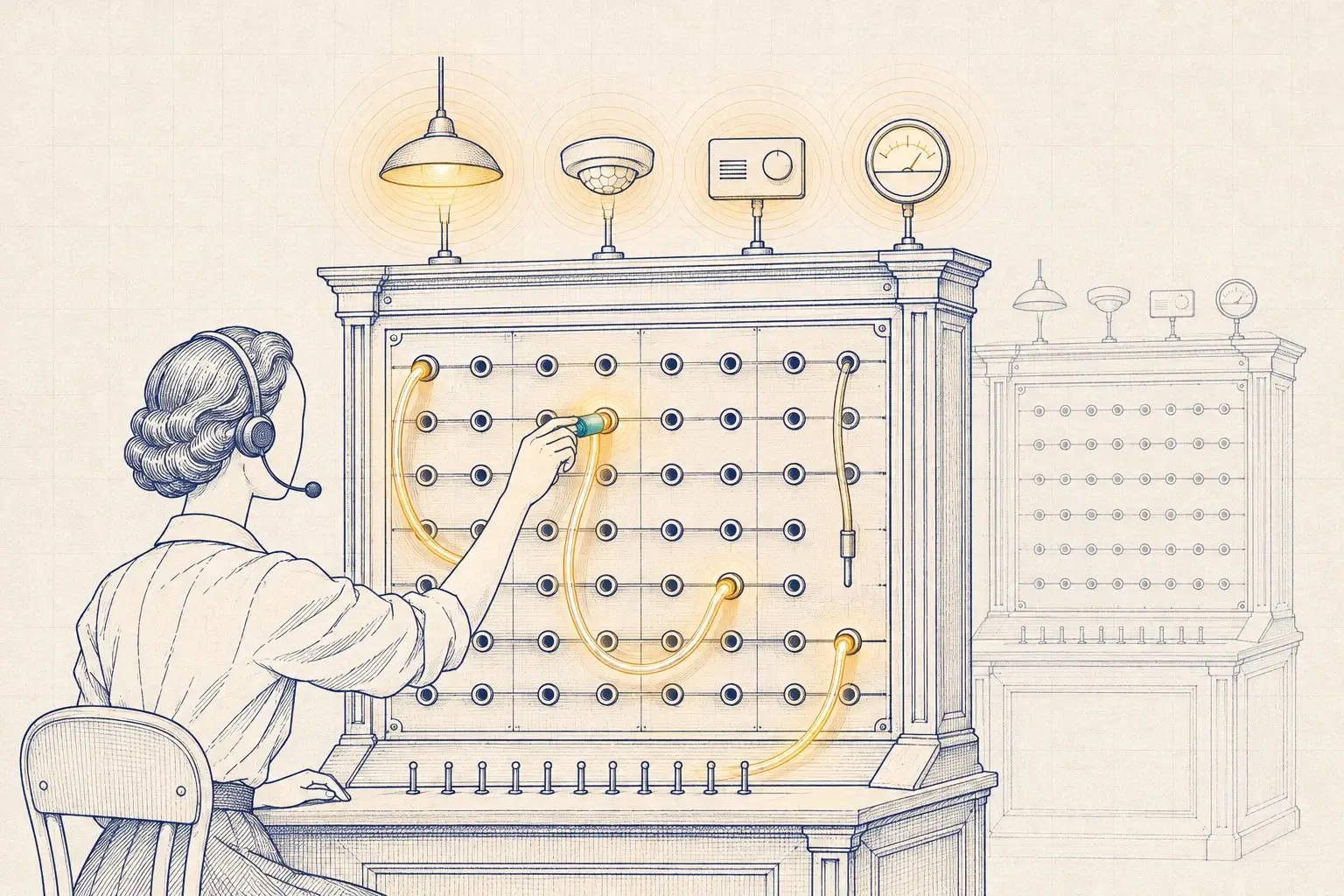
Healthcare IT teams review everything that touches the network, and they should. We put lighting on a segmented network, document every device, and use BACnet/IP or BACnet/SC to share occupancy and status with the building automation system. Whether airflow can drop in an unoccupied exam room is a decision for your mechanical engineer under the applicable ventilation standard; our job is to give them a reliable occupancy signal. Our BMS integration and cybersecurity services cover both sides.
Incentives and code
Clinics in TVA territory can apply through EnergyRight, which requires pre-approval before purchase and gives additional credit for networked controls. Entergy Mississippi and Mississippi Power customers have their own commercial programs. We prepare the applications and coordinate with your local power company and program staff.
Energy code adoption varies across Mississippi, Tennessee, and Alabama, and healthcare projects also answer to life-safety and licensing requirements. We confirm the applicable energy code edition with the authority having jurisdiction, and we provide the kind of functional testing documentation that ASHRAE 90.1-2022 and the 2024 IECC call for.
What we’d do first
Walk the building at night with the charge nurse or clinic manager. Then read our representative outpatient clinic scenario for a worked example.