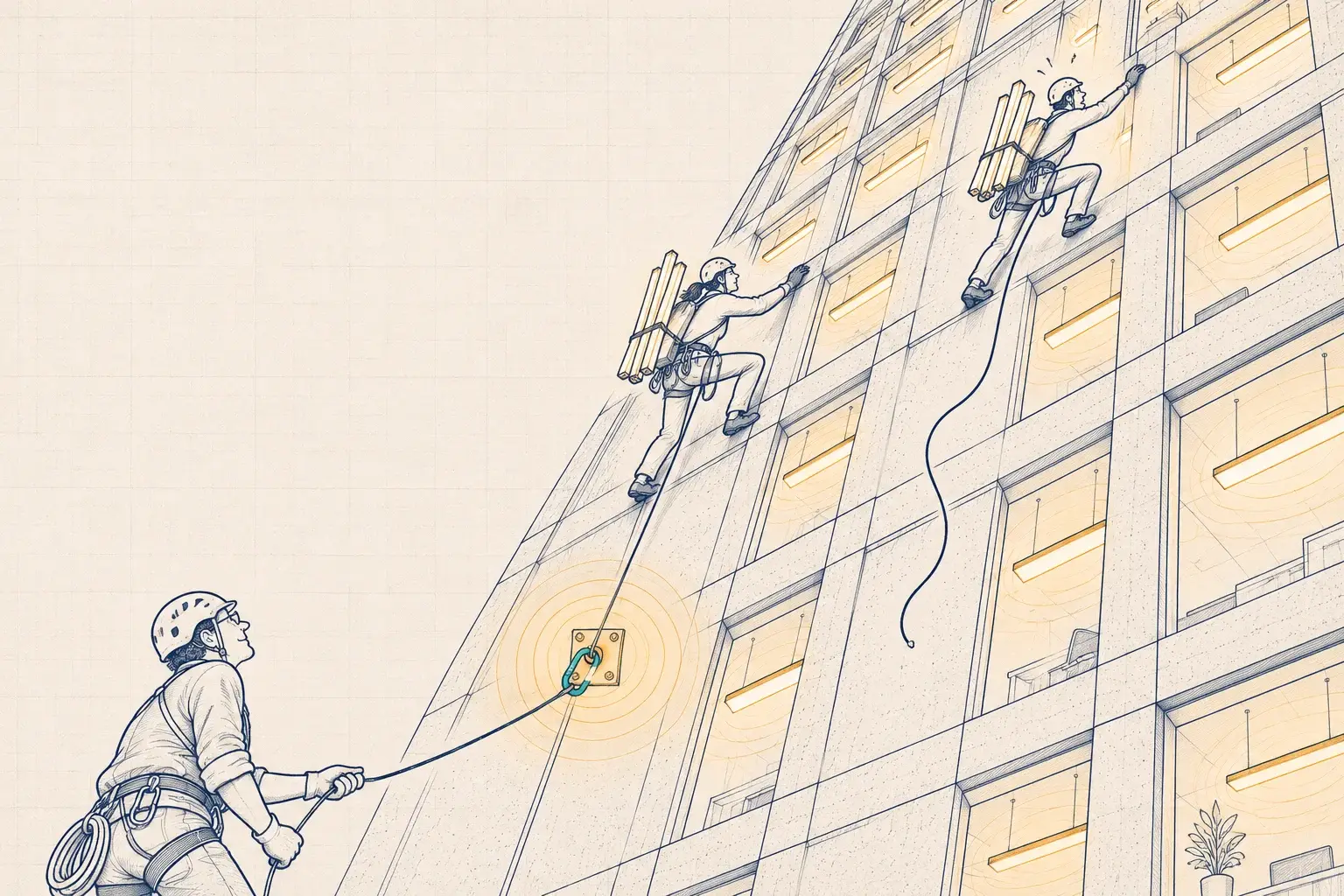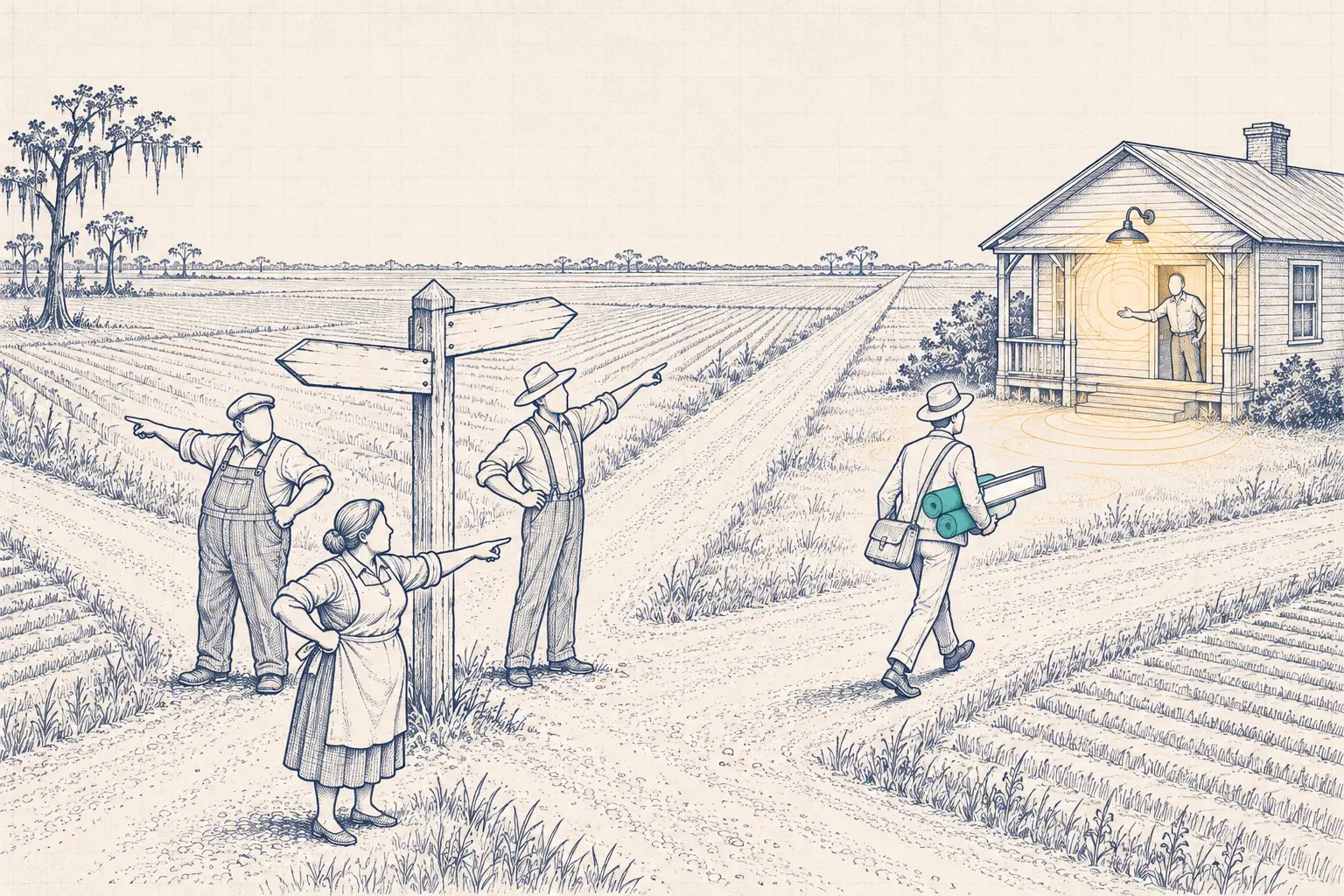
Why this is confusing
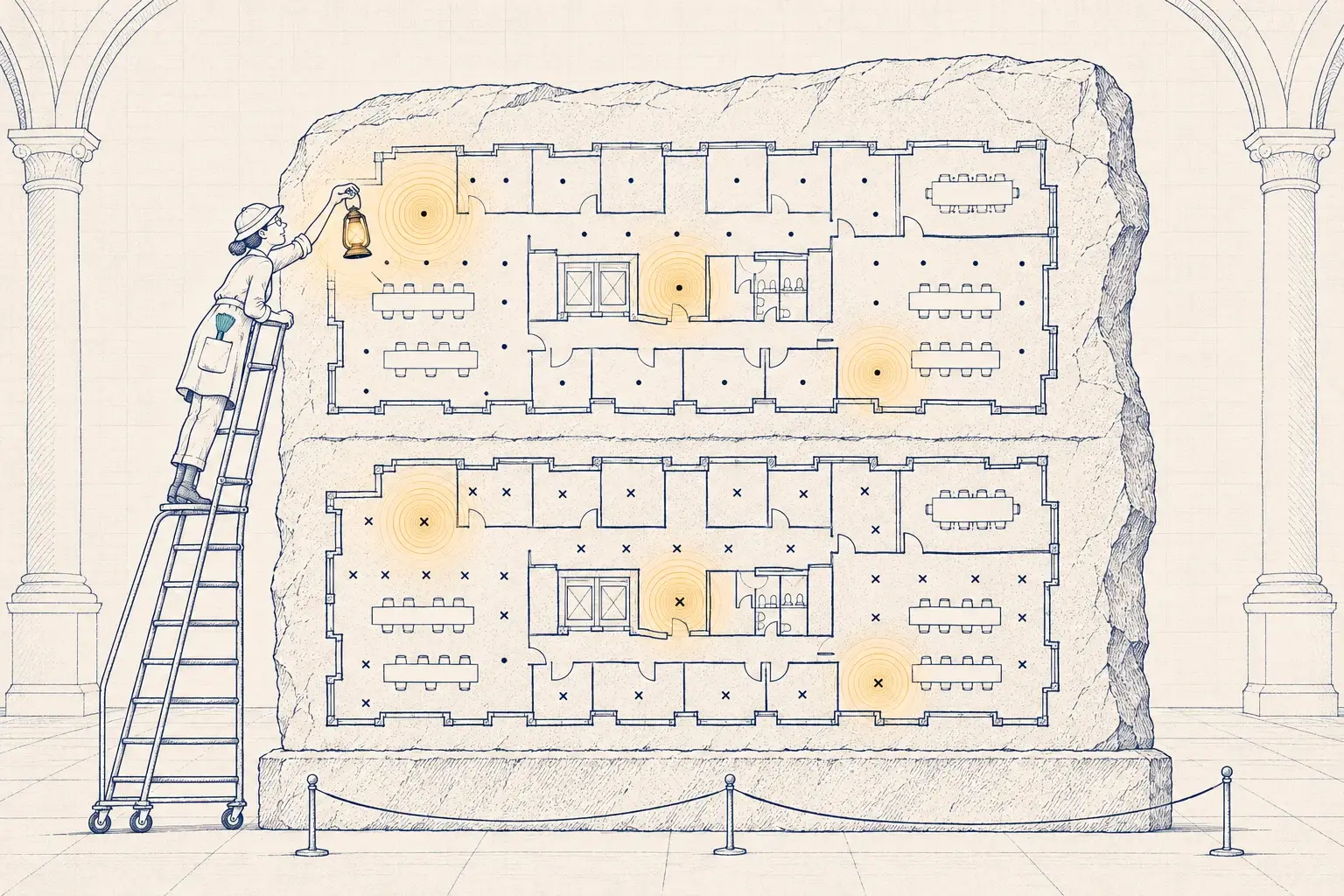
Search for Mississippi’s commercial energy code and you will find two respected national sources that don’t agree. ACEEE’s state policy database reports a mandatory statewide commercial energy code. The U.S. Department of Energy’s code-status tracking at energycodes.gov lists no statewide commercial code for Mississippi. Both are maintained by people who follow this for a living.
We have read both, and we don’t think a blog post should settle the question. Neither should a design team, an equipment vendor or a contractor’s habit. The person who settles it for your project is the building official, the authority having jurisdiction (AHJ), and the answer can differ from one city or county to the next.
What we can do is explain who decides, what to ask, and how to design lighting controls that pass under any reasonable reading.
Who sets the bar for your project
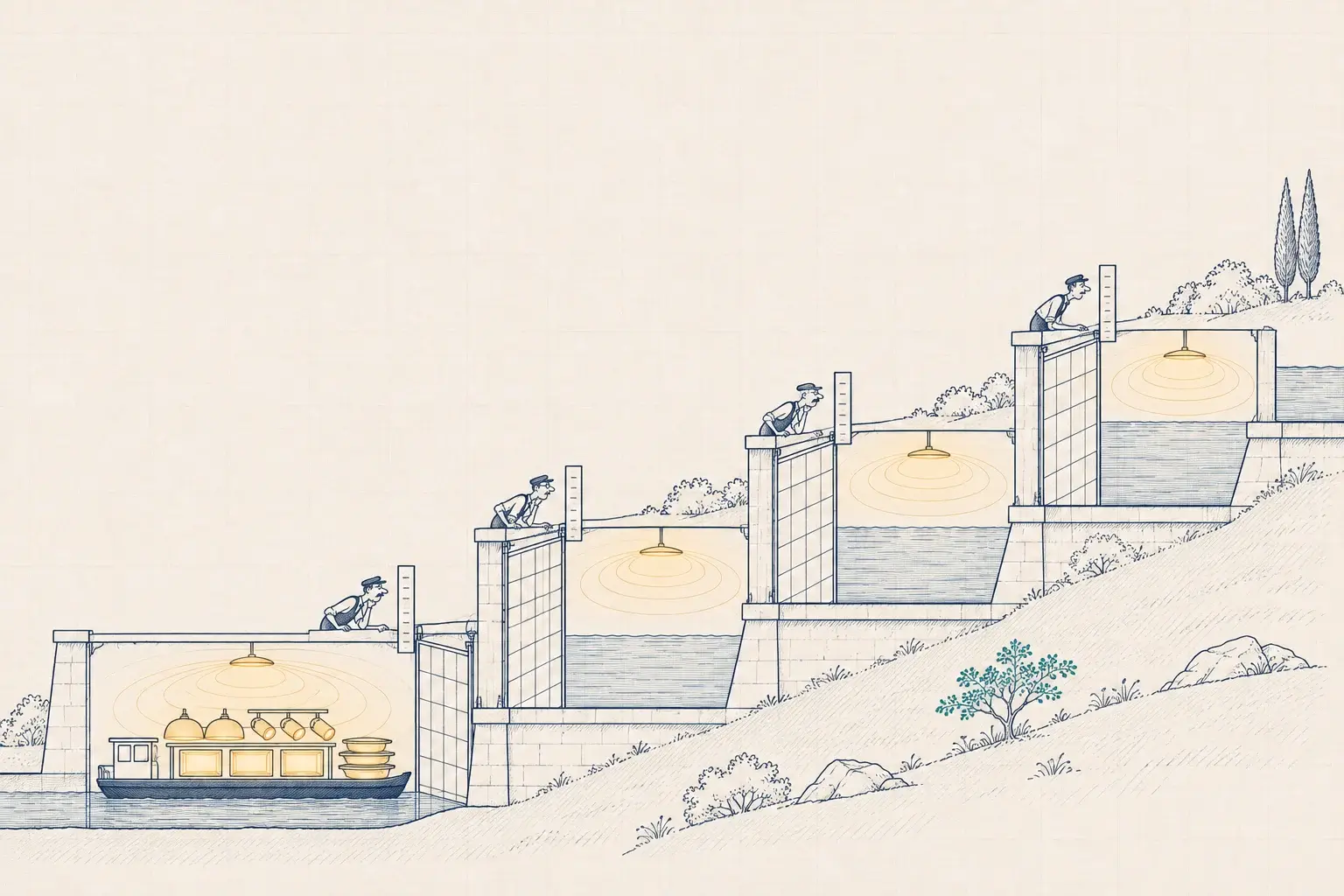
Several layers can apply to the same building. In practice, the strictest one that applies is the one you design to.
| Project situation | Who sets the requirement | What to ask |
|---|---|---|
| Private building in a city or county that has adopted building codes | The local AHJ, through its adopted code | Which energy code and edition do you enforce, with which local amendments, and do you review lighting controls at plan review, inspection or both? |
| Building where enforcement is limited or absent | Often nobody by law; in practice lenders, insurers, tenants and incentive programs | What do our lender, insurer, future tenants and utility program require? |
| State-funded project | The funding agency and its rules | Which energy standard does the agency require, and how is compliance documented? |
| Federal or federally funded project | The federal program’s requirements | Which edition of 90.1 or the IECC applies? These projects often follow newer editions. |
| National chain, franchise or corporate campus | Corporate design standards | Does the prototype specify a code edition, control sequences or a controls platform? |
| Project seeking utility incentives | Program rules | Does the program need code-baseline documentation, DLC-listed controls or functional testing records? |
Federal, state-funded and national-chain projects often follow newer editions than local enforcement requires. That is why two buildings on the same street in Southaven or Tupelo can be built to quite different lighting control standards.
What we design to
Our default for commercial work across Mississippi, Memphis and North Alabama is at least ASHRAE 90.1-2019/2022-style lighting controls, unless the AHJ or the owner requires something stricter. DOE determined that 90.1-2022 saves roughly 10% over 90.1-2019, so where the budget allows, we lean toward 2022.
In practical terms, that means a design that includes:
- Local manual control in each space, including a way to reduce light
- Automatic shutoff: occupancy or vacancy sensors in most enclosed spaces, and scheduled shutoff elsewhere
- Manual-on or partial automatic-on in the spaces where codes restrict full automatic-on
- Automatic partial-off where spaces are often empty but need some light: warehouse aisles, stairwells, corridors and parking garages
- Daylight-responsive controls in sidelit and toplit zones
- Multilevel or continuous dimming where the code calls for it
- Exterior lighting that shuts off in daylight and reduces after hours
- Parking garage controls, including daylight zones near openings
- Automatic receptacle control where required
- Functional testing of every control, with written records
Thresholds, time delays and exceptions vary by edition. We write the actual requirements of the governing edition into the sequence of operations for each project, so the contractor builds to a document, not to a memory of the last job.
Where the 2024 IECC goes further
Some projects, particularly those following corporate standards or federal programs, use the 2024 IECC. For lighting controls, three changes stand out:
- a lower wattage threshold for requiring daylight-responsive controls;
- functional testing of automatic receptacle controls;
- functional testing of high-end trim and demand-responsive controls where they are installed, under section C408.3.
If you design to 90.1-2019/2022-style controls, include high-end trim, keep demand response in mind and test everything, you are well positioned if a project ends up under the 2024 IECC.
Some corporate prototypes are written around California’s Title 24 instead. Its 2025 edition, effective at the start of 2026, calls for continuous dimming down to 10% or lower, occupancy sensor delays of 20 minutes or less, and daylighting controls at 75 W and above. If your prototype references Title 24, follow it; the local AHJ will not object to a stricter design.
Retrofits and alterations
Most lighting work in our region is retrofit, not new construction. Codes generally treat alterations differently from new buildings, and whether replacing fixtures triggers control requirements depends on the edition, the scope of the alteration and any local amendments. Ask the AHJ before you assume an LED retrofit is exempt, and before you assume it isn’t. When in doubt, add the controls. Incentive programs reward them anyway, and the energy they save doesn’t depend on who inspects them.
The gaps we look for first
Whatever the code status, the same handful of gaps shows up in existing commercial buildings across the Mid-South. When we walk a building, these are the first things we check, because each one is both a likely code issue on the next permit and an easy energy win:
- Warehouse and plant high-bays switched at the breaker panel. No occupancy control, no partial-off, and lights that run through every empty weekend.
- Exterior lighting on a photocell only. Lights come on at dusk and stay at full output until dawn, with no after-hours reduction.
- Daylight zones that were never set up. The sensors were installed, but nobody calibrated them, so perimeter fixtures run at full output beside sunny windows.
- Occupancy sensors defeated. Taped over, set to maximum delay, or switched to manual override after one complaint years ago.
- Time clocks that lost their schedule. A power outage or daylight-saving change reset them, and the building has run on the wrong hours ever since.
- No records at all. No sequence of operations, no configuration report, and no way to show an inspector or a utility program what the controls are supposed to do.
None of these needs a new code to justify fixing it. Most of them need a technician, a ladder and an afternoon.
Where incentives fit
Utility programs in the state reward savings beyond a baseline: TVA EnergyRight through local power companies such as Tupelo Water & Light, Entergy Mississippi’s Solutions for Business, and Mississippi Power’s commercial programs. TVA EnergyRight requires pre-approval before work starts and gives extra credit for networked controls. Mississippi Power’s Large C&I program lists networked lighting controls as eligible. Code status can affect how a program sets its baseline, which is one more reason to document what you designed to and why.
On federal tax incentives: the 179D deduction is not available for property whose construction begins after June 30, 2026. If your project started before then, consult a tax advisor.
A representative scenario: two buildings, one county
Consider two representative projects in the same North Mississippi county in the same year. One is a privately funded speculative warehouse. The other is a state-funded vocational training center a few miles away.
For the warehouse, we would ask the local building department what it enforces and record the answer. Then we would design luminaire-level high-bays with partial-off in the aisles, daylight response under skylights, exterior reduction after hours and full functional testing, because the future tenant’s corporate standards, the utility incentive and the leasing pitch all benefit. For the training center, we would confirm the funding agency’s energy standard, which may be stricter than local enforcement, and design and document to it.
Same county, two different answers to the question of which code applies, and the same controls philosophy underneath. Our North Mississippi page lists the communities and utilities we work with across the region.
What we’d do
- Ask the AHJ in writing at project start. Which code, which edition, which local amendments, and how lighting controls are reviewed.
- Check the other layers. Funding agency, corporate standards, lender, insurer and incentive program.
- Design to at least 90.1-2019/2022-style controls, and stricter wherever any layer requires it.
- Write the sequences, citing the governing requirement for each.
- Test and document everything, whether or not anyone inspects it. Our commissioning process produces the test logs and configuration report.
- Keep the record. Code basis, AHJ correspondence, test logs and configuration reports live in Ledger Reports, ready for the next inspector, auditor or buyer.
Where to start
Our energy code compliance service handles the AHJ conversation, the control design and the documentation. If you are not sure where to begin, a Baseline Assessment will tell you what your building has, what the code and incentive programs are likely to ask for, and what it would take to get there.
Filed under: Mississippi energy code · ASHRAE 90.1 · 2024 IECC · code compliance · functional testing