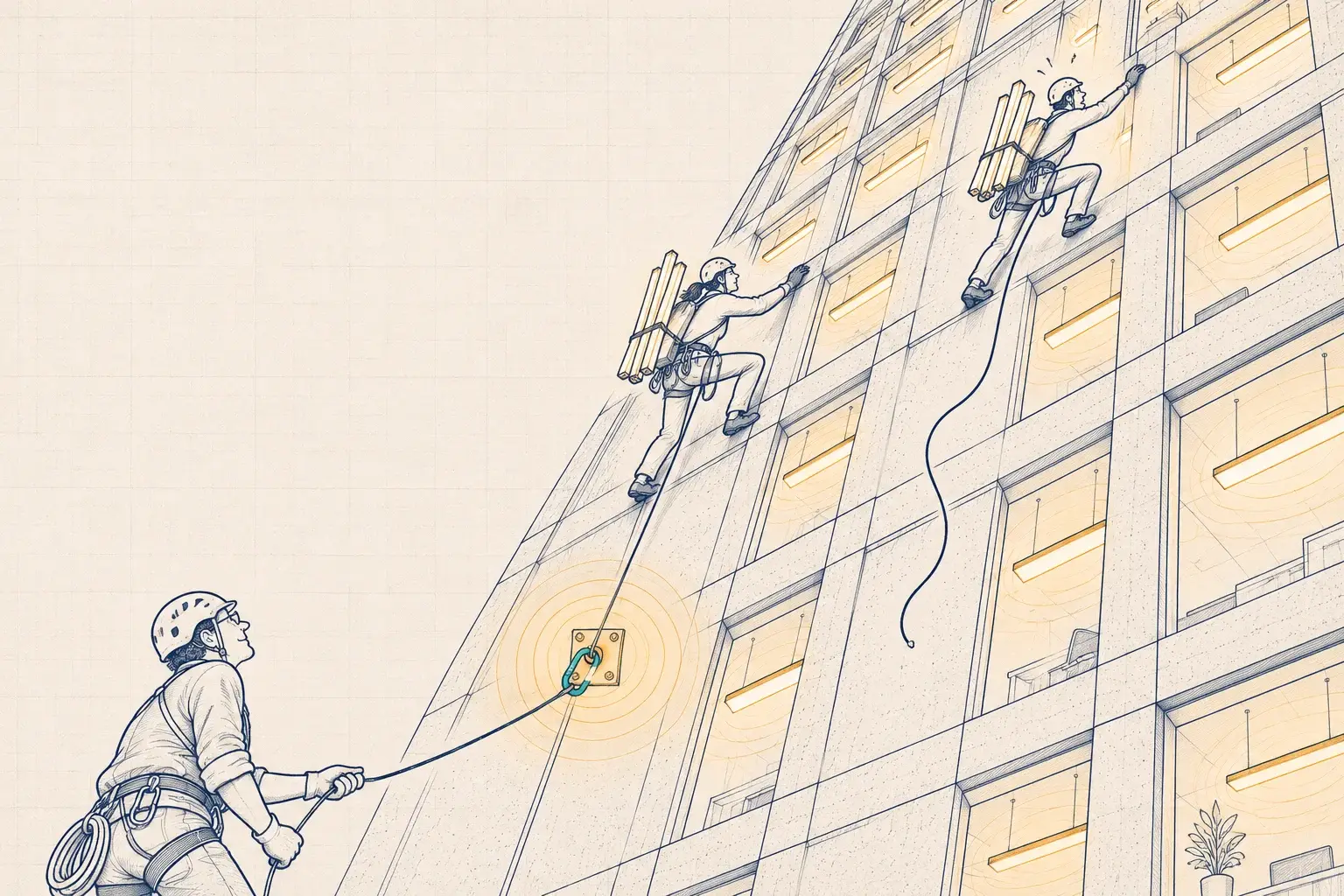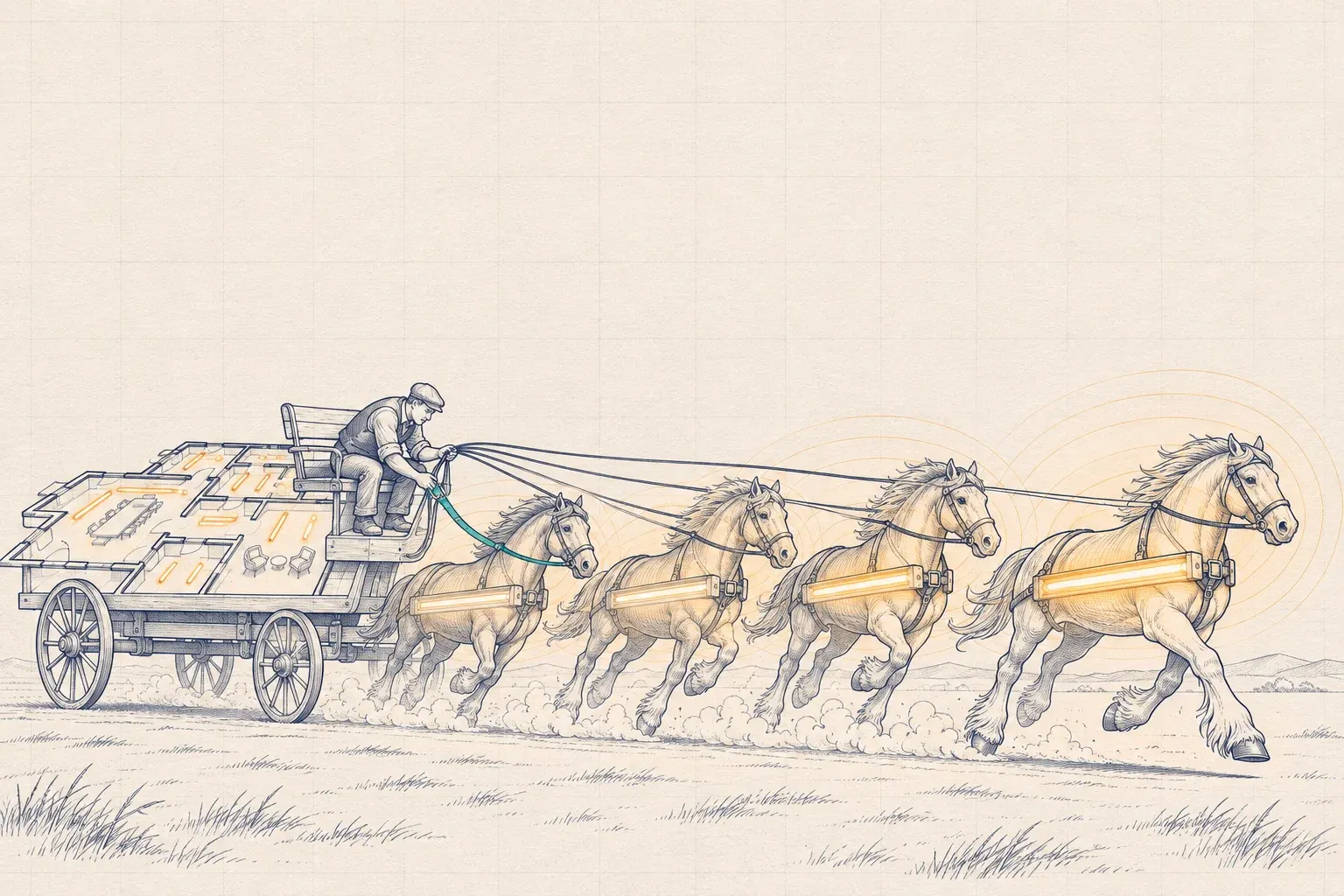
The decision
Across the Mid-South, a lot of commercial buildings went LED in the last decade. Fluorescent troffers became LED panels, metal halide high-bays became LED high-bays, and the electric bill dropped. In many of those projects, controls were left out to keep the first cost down.
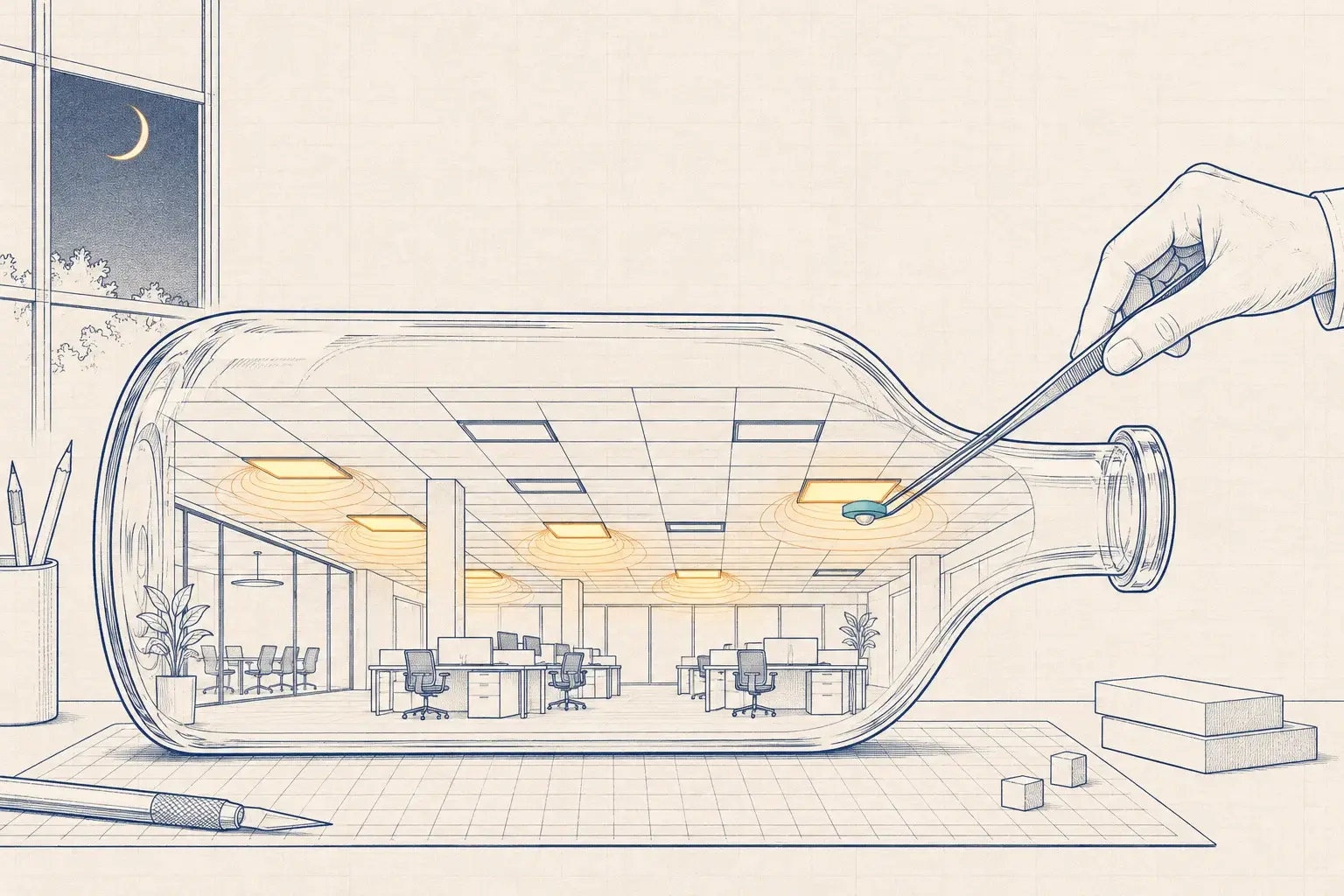
Those buildings now face a second decision: add controls to the LED fixtures already in the ceiling, replace them with fixtures that include luminaire-level controls (LLLC), or leave them alone for now. Here is how to make that call. The answer depends on four things: the drivers, the hours, the condition of the fixtures and the incentives.
Why existing LEDs still waste energy
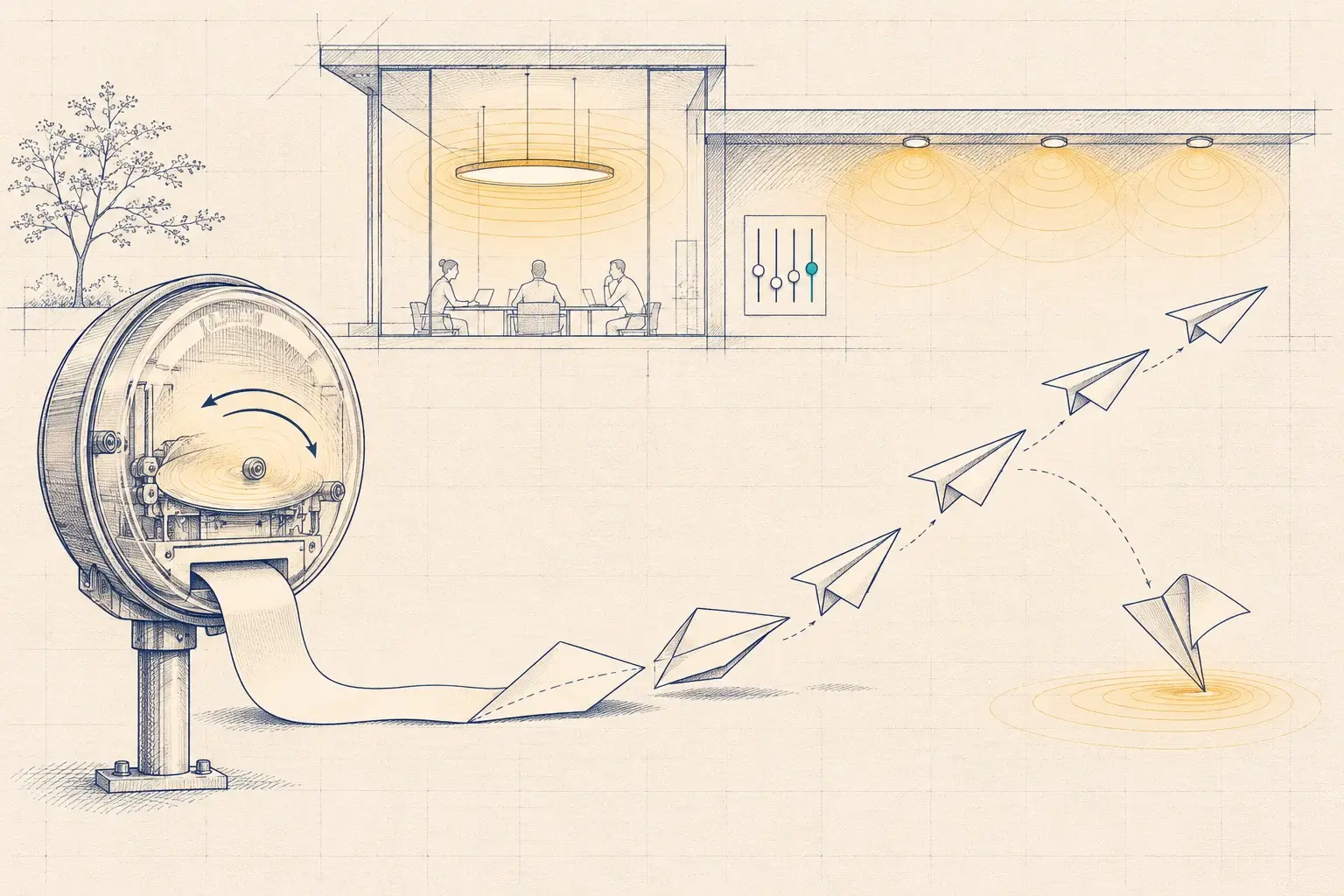
Energy is watts times hours. The LED retrofit cut the watts. Without controls, nothing touched the hours: every fixture runs at full output for every hour the building is open, whether anyone is under it or not. Many LED fixtures also deliver more light than the space needs, especially in buildings where old fixtures were swapped one-for-one without a new lighting design.
Controls go after the hours and the excess output:
- Occupancy and vacancy sensing turns off or dims lighting in empty areas.
- High-end trim caps each zone’s output at what the space needs.
- Daylight response dims fixtures near windows and skylights.
- Scheduling shuts areas down after hours.
The savings are not small. DLC estimates average savings of about 49% for networked lighting controls and 63% for NLC with LLLC. Those are averages across many buildings; your building’s result depends on its hours and occupancy patterns, which is why we measure before promising anything.
Three paths
| Path | What it involves | Best when | Watch out for |
|---|---|---|---|
| Add controls to existing fixtures | Wireless control nodes or sensors added at each fixture or circuit; existing dimmable drivers stay | Fixtures are in good condition with dimmable 0-10V or DALI drivers and plenty of rated life left | Driver compatibility, low-end dimming behavior, and the fixture’s listing and warranty |
| Replace with LLLC fixtures | New fixtures with an integrated sensor and controller in each luminaire | Existing LEDs are early-generation, failing, non-dimming or poor quality | Higher material cost; disposal of fixtures that still work |
| Defer and re-commission | Use and tune whatever controls already exist; plan controls for later | Controls exist but were never configured, or the building’s future is uncertain | Deferring costs energy every month you wait |
The middle path, replacing fixtures, is not a failure of the first. For a building with LEDs installed early in the technology’s life, a new fixture with integrated controls can cost about the same to install as adding nodes and replacing drivers, and comes with a new warranty.
Check the drivers first
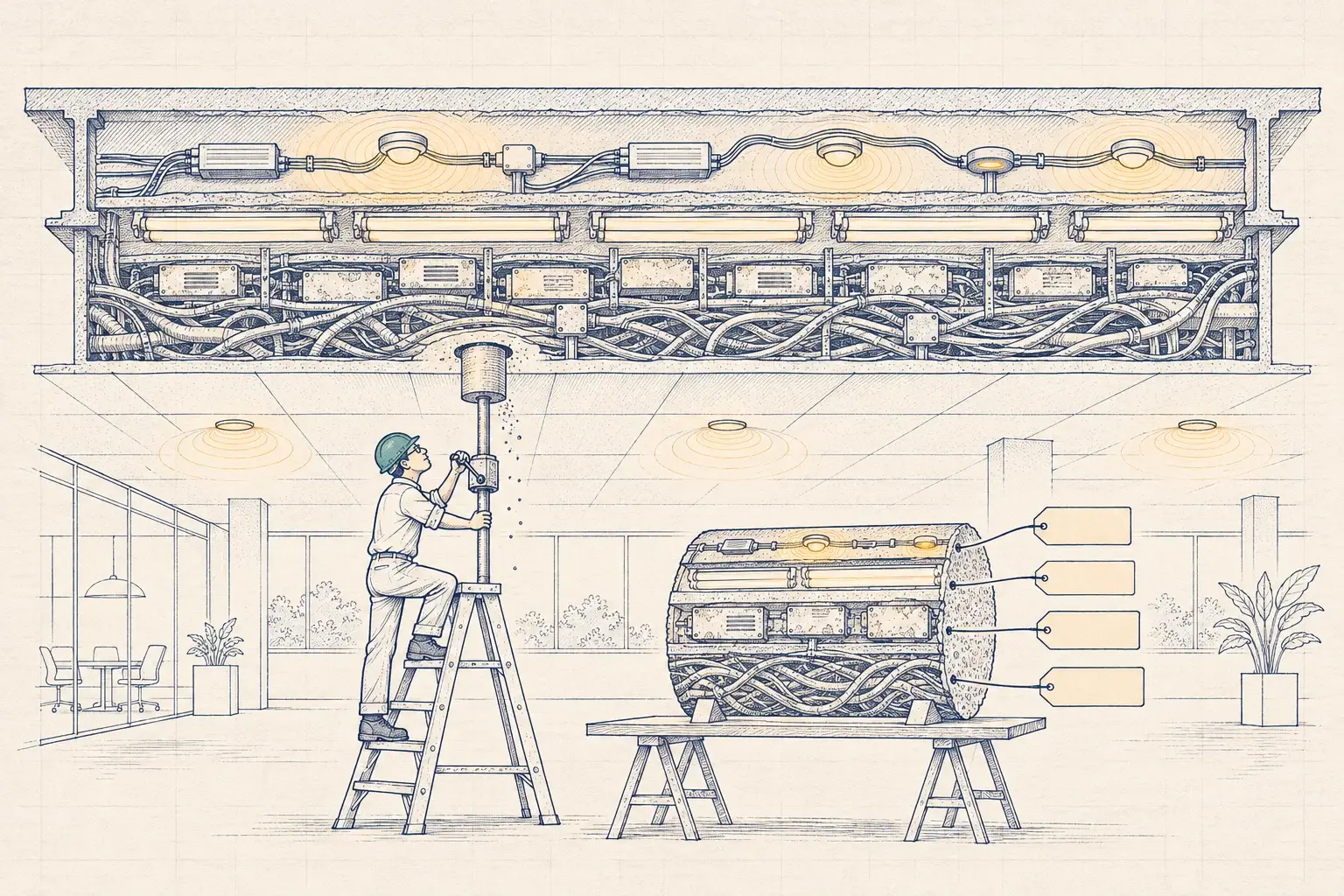
The driver inside each fixture decides how easy it is to add controls. Before anyone designs anything, we open a sample of fixtures of each type and record:
- Dimming interface: 0-10V (usually a violet and a gray lead), DALI, or none.
- Dimming range: the lowest level the driver supports, and whether it dims smoothly or steps.
- Manufacturer and model, so we can check datasheets and compatibility.
- Age and operating hours, against the fixture’s rated life.
- Condition: discoloration, flicker, failed fixtures in the same batch.
- Room for a node or sensor in or on the fixture, and the wiring path.
- Listing and warranty implications of adding a device.
Then we take a sample fixture to the Lytbit Lab, connect it to the candidate control nodes, and test dimming behavior across the full range. A driver that dims smoothly with one node can flicker at low levels with another. It’s much cheaper to find that out on the bench than in a ceiling.
Our post on NLC vs. LLLC explains the difference between adding networked controls at the room level and putting controls in every fixture.
Where it pays first
Controls pay back fastest where the gap between operating hours and actual occupancy is widest. In the Mid-South, that typically means:
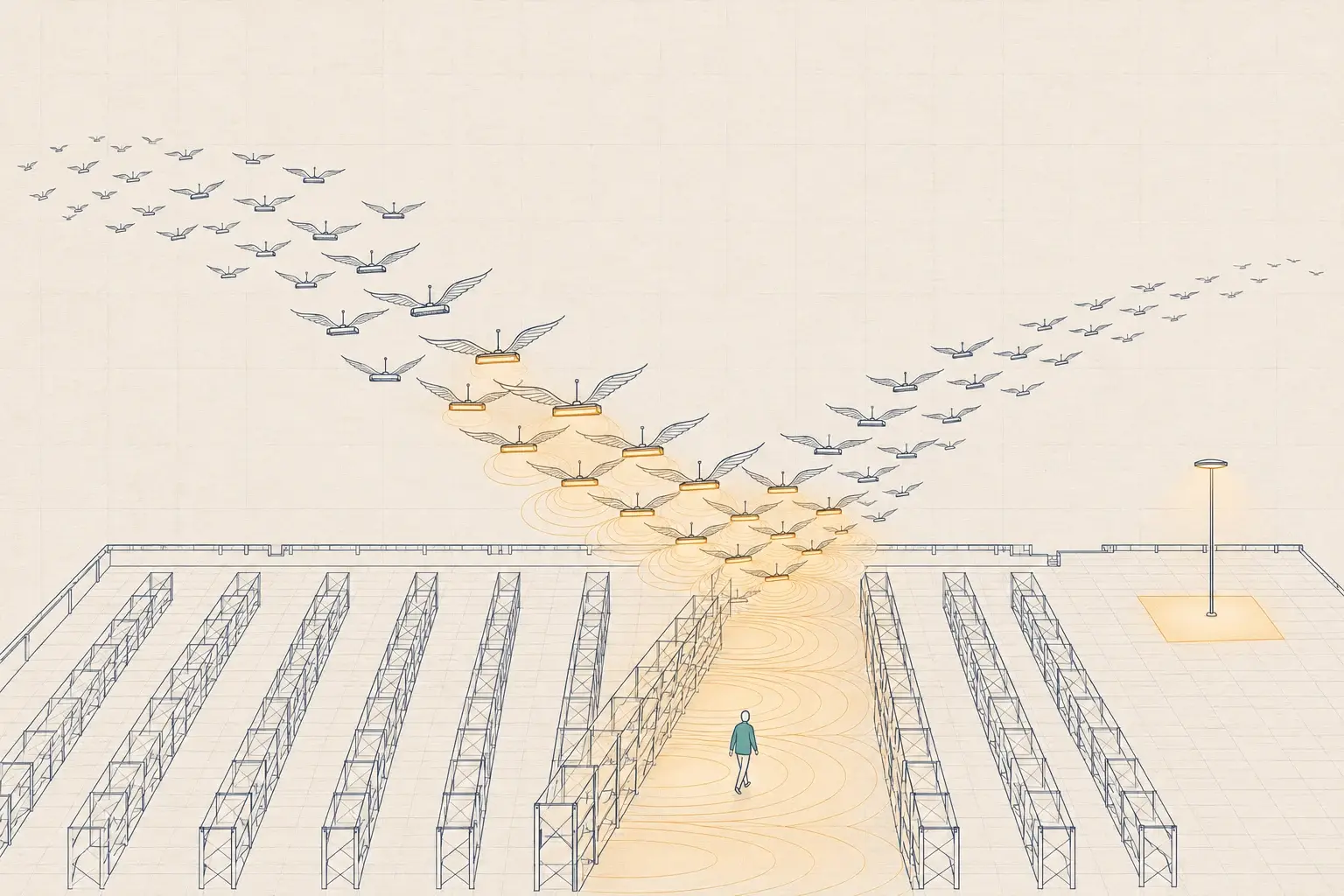
- Warehouses and distribution centers with long hours and sparse aisle activity, from Tupelo to the Memphis distribution corridor.
- Manufacturing support spaces, such as storage, mezzanines and maintenance shops in multi-shift plants.
- Parking structures and exterior lighting, which run all night with little activity.
- Corridors, stairwells and restrooms in offices, schools and clinics.
- School gyms and cafeterias, which sit lit through long unoccupied periods.
Private offices and open offices with good daylight also benefit, through vacancy sensing and daylight response, but usually with smaller absolute savings per fixture.
A typical mixed building
Few buildings fall neatly on one path. Picture a two-story office and warehouse in Olive Branch, retrofitted to LED in stages over several years, as many Mid-South buildings were:
- Offices: LED flat panels with dimmable 0-10V drivers, installed in a later phase. Sound fixtures with plenty of rated life left. Path: add wireless controls, with vacancy sensing in private offices, daylight response along the windows and high-end trim everywhere.
- Warehouse: LED high-bays from an early, low-cost retrofit, with non-dimming drivers and a handful already failing. Path: replace with LLLC high-bays, because replacing drivers at height costs nearly as much as new fixtures and the existing ones are ageing.
- Exterior: LED wall packs and pole heads on a time clock that drifts with every power outage. Path: astronomical scheduling and late-night reduction where the fixtures support dimming; switching only where they don’t.
- A leased suite the owner may reconfigure next year. Path: defer, and design the controls with the fit-out.
The result is one project with three paths, sequenced so the warehouse, where the hours are longest, goes first.
Pick a platform with the next few years in mind
If you are adding networked controls now, choose a platform that can grow into what utility programs and building teams are asking for. DLC’s NLC 5.2 technical requirements add HVAC and smart-thermostat integration and configuration reports in ANSI/NEMA C137.9 format, and energy monitoring is required for indoor systems that are not room-based. Even if you don’t need those features today, a listed platform that supports them keeps incentive options open and lets the lighting data feed HVAC setback and energy reporting later.
The incentive picture
The incentive environment has shifted in a direction that favors this kind of project. LightNOW’s summary of BriteSwitch’s 2026 commercial lighting rebate trends reports that controls incentives and LED-to-LED replacement rebates are up, while some fluorescent-replacement rebates are ending. In other words, utility programs are paying more attention to the second retrofit.
In TVA territory, EnergyRight gives extra credit for networked controls and requires pre-approval before work starts. Our post on getting the most from TVA EnergyRight walks through the process. Outside TVA territory, Entergy Mississippi and Mississippi Power have their own commercial programs; Mississippi Power’s Large C&I program lists networked lighting controls as eligible. Program terms change by year, so confirm the current rules before you design.
Common mistakes
- Assuming all fixtures of one type have the same driver. Manufacturers change drivers mid-production. Open more than one.
- Skipping the low-end test. Some drivers flicker or drop out at their lowest levels.
- Ignoring fixture age. Adding controls to fixtures that will need replacing in a few years can mean paying for controls twice.
- Leaving high-end trim out. It costs little to configure and saves energy every hour the lights are on.
- Not measuring. Without energy data, you can’t confirm savings, tune settings or support the next incentive application.
What we’d do
For a building with existing LED fixtures and no controls, we’d:
- Survey the fixtures and drivers, opening a sample of each type.
- Review operating hours and occupancy patterns, from schedules, interviews and, where possible, a short logging period.
- Bench test a sample fixture with candidate controls in the Lytbit Lab.
- Choose the path by area: add controls where fixtures are sound, replace where they aren’t, defer where the building’s future is uncertain.
- Check incentives and pre-approval before ordering anything.
- Install, commission and trim, with measured results recorded.
- Measure energy for a season and tune.
This is the work of our Wireless Retrofit & LLLC service. If you aren’t sure what’s in your ceiling or whether controls would pay, a Baseline Assessment surveys your fixtures and drivers, estimates savings and incentives, and recommends a path for each area of the building.
Filed under: LED retrofit · LLLC · wireless controls · 0-10V dimming · incentives